Meta has identified two concrete desktop workflows for Muse Spark Open: modifying software through its Muse Code terminal and reviewing or cropping footage in DaVinci Resolve. These company-reported deployments move the announcement beyond a general claim of agentic capability, but they do not establish how reliably or efficiently the model completes either job, according to TechCrunch’s account of the launch.
For commercial operations teams, the useful question is therefore narrower than whether an open-weight model can run locally. It is whether one of these demonstrated task types resembles a repeatable internal workload closely enough to justify evaluation.
Two desktop workflows anchor Meta’s evidence
Meta describes Muse Spark Open as a multimodal model built for coding and agentic work. The practical evidence reported by TechCrunch consists of company examples rather than an independent evaluation: a software workflow involving a Mastodon client and a separate deployment using professional video-editing software. The report attributes both examples directly to Meta.
The examples matter because they involve actions inside working tools, not only answers generated in a chat window. In the coding case, the model was paired with Muse Code and assigned changes that covered defect correction, feature work and a complete build. In the video case, Meta says the model reviewed footage and selected crops in DaVinci Resolve.
| Workflow | Reported action | Evidence still absent |
|---|---|---|
| Software development | Changes to a Mastodon client, including fixes, features and a build | Task logs, failure handling and comparison with a developer |
| Video editing | Footage review and cropping in DaVinci Resolve | Selection criteria, edit quality and operator intervention |
Both rows reflect the examples in TechCrunch’s report. The missing evidence column records information the report does not provide, rather than evidence that the workflows failed.
Code repair is the stronger operational starting point
The coding example describes a longer chain of work than a single code suggestion. Muse Spark Open was connected to Meta’s coding terminal and used for modifications that culminated in a build, according to Meta’s account reported by TechCrunch. That gives an engineering or software operations team a recognisable process to examine: inspect a repository, change files and test whether the project still builds.
It does not show the size of the codebase, the complexity of the requested changes or how much correction was required from a person. The report also provides no execution record from which a buyer could separate successful autonomous work from a closely supervised demonstration.
A useful internal evaluation would therefore reproduce one bounded maintenance task from the organisation’s own backlog. The relevant output is not the volume of generated code but whether the change satisfies the existing acceptance conditions without creating additional defects. This is an evaluation design inferred from the disclosed workflow, not a result claimed by Meta.
The hardware threshold remains a separate decision. Teams assessing local deployment can refer to our earlier analysis of Muse Spark Open’s local hardware requirements; the workflow examples do not remove those infrastructure demands.

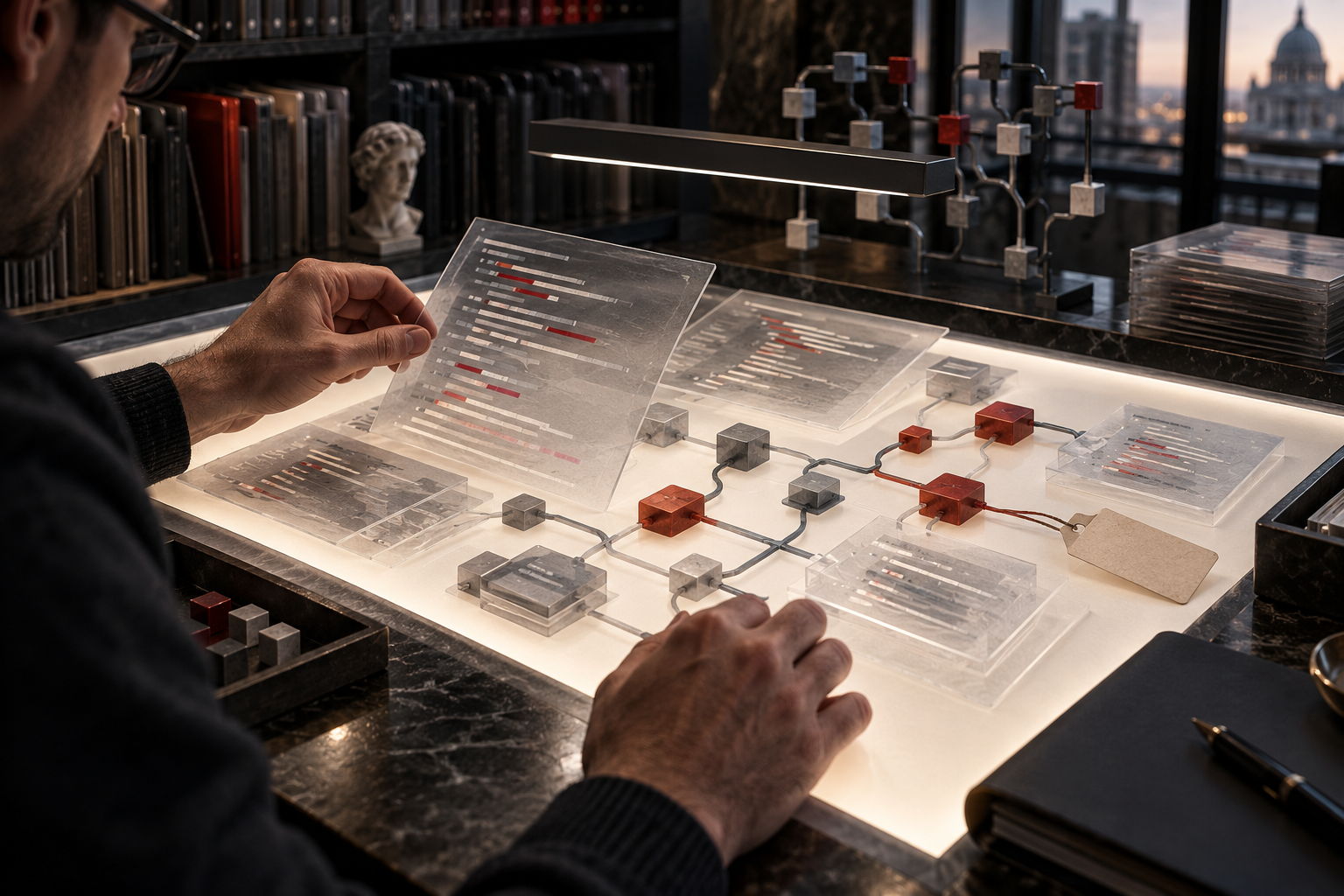
Conceptual illustration of the coding workflow Meta described for Muse Spark Open.
Video cropping remains a narrower demonstration
Meta also says it deployed Muse Spark Open with DaVinci Resolve, where the model reviewed and cropped footage, as reported by TechCrunch. This demonstrates interaction with audiovisual material and an editing application, consistent with the model’s stated multimodal design.
The disclosed action is narrower than completing a commercial video edit. Reviewing and cropping do not establish narrative selection, brand consistency, audio treatment, colour work or approval readiness. TechCrunch’s report does not describe the source footage, the instructions given to the model or the criteria used to judge the resulting crops.
For a marketing operations team, the closest defensible test is consequently a constrained preparation task: selecting candidate segments or reframing material before an editor makes final decisions. Treating the example as evidence of end-to-end post-production would extend beyond what Meta has disclosed.

Conceptual illustration of footage review and cropping, not a photograph of the reported deployment.
The missing evidence defines the next test
The announcement establishes that Meta has connected Muse Spark Open to a coding terminal and professional editing software. It does not provide independent results for accuracy, completion rate, operating speed or the amount of human intervention. It also does not compare these workflows with hosted models or conventional tool automation in equivalent conditions.
That distinction matters because open weights and local execution describe access and deployment, not task performance. TechCrunch reports that Meta is also making the model available through API platforms, so local operation is not the only route presented in the launch. The source does not provide evidence comparing those routes for the cited workflows.
The immediate decision is to test Muse Spark Open only against the bounded coding or media-preparation task that matches an existing workload. The next evidence to watch is a reproducible workflow record showing inputs, tool actions, corrections and final acceptance—not another broad capability claim.