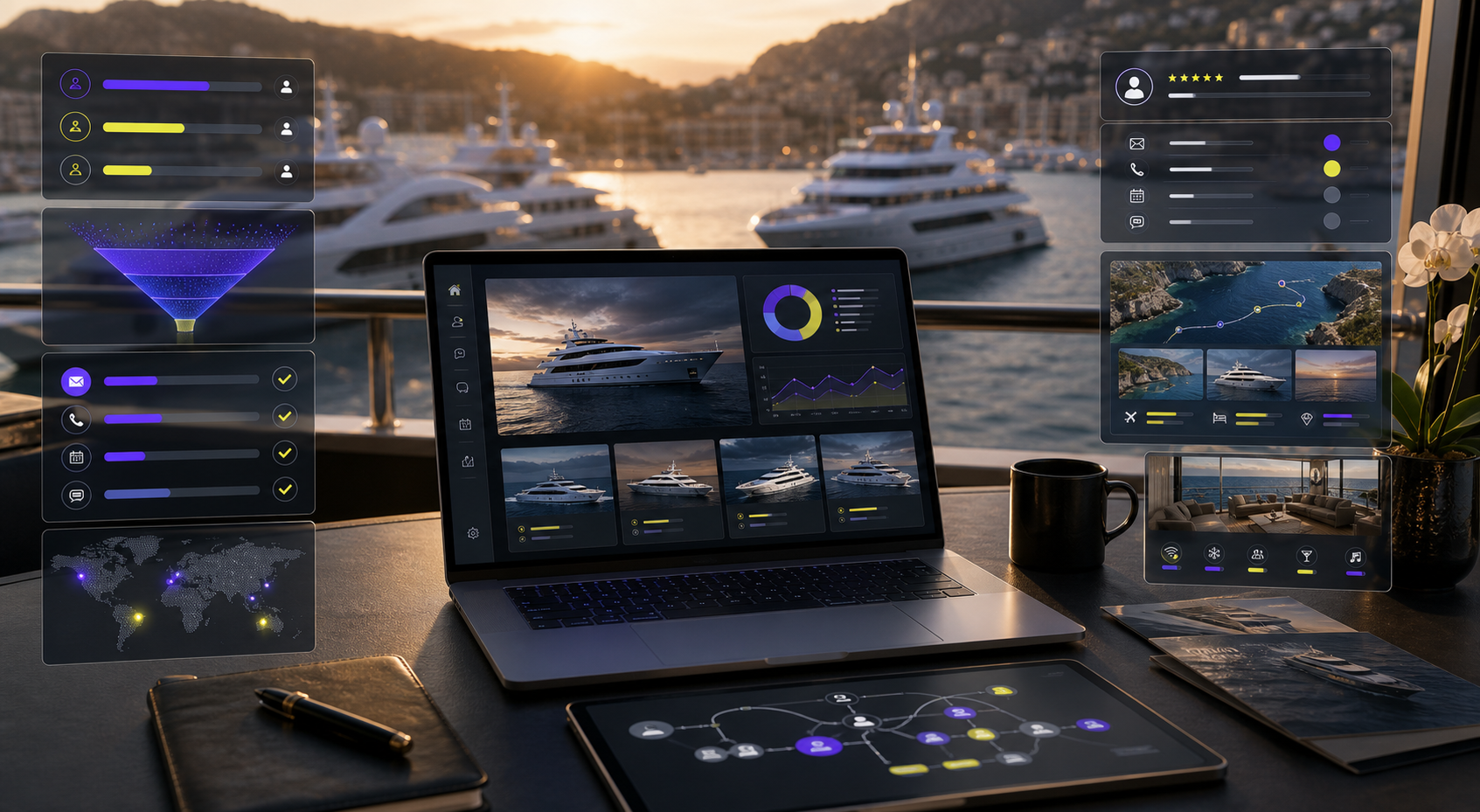
Yacht charter websites use AI to turn a vague luxury travel idea into a qualified charter inquiry faster. The strongest use cases are AI-assisted yacht matching, natural-language search, itinerary generation, lead qualification, multilingual concierge chat, dynamic content, CRM enrichment and post-inquiry sales automation. For high-ticket charter markets, AI is not mainly about replacing brokers. It is about reducing friction between inspiration and a serious conversation with a human expert.
Key Takeaways
- AI helps yacht charter websites answer complex intent, not only simple search queries.
- The highest-value workflows are yacht matching, itinerary planning, inquiry qualification, broker support and personalized follow-up.
- Luxury buyers still expect human expertise, so AI should support brokers rather than hide them.
- AI-generated content can improve destination discovery, but it needs expert review, unique data and a clear brand voice.
- The winning stack connects website behavior, CRM data, yacht inventory, destination knowledge and human sales follow-up.
Why yacht charter websites are a natural fit for AI
A yacht charter inquiry is rarely simple. A visitor may not know the exact yacht, destination, embarkation port, itinerary length, guest profile, toy requirements, crew style or budget range. They may type a broad request such as “a family-friendly yacht in the Balearics for August” or “a quiet luxury charter near Sardinia with a chef and water toys.” Traditional filters struggle with this kind of intent.
AI works well because yacht charter is a recommendation problem. The website needs to interpret preferences, compare options, explain trade-offs and move the user toward a qualified request. This is similar to broader travel trends. McKinsey’s research on travel and AI argues that AI can reduce friction across the journey, make personalization scalable and free employees to focus on meaningful service. In yacht charter, that means brokers spend less time decoding incomplete leads and more time advising serious clients.
The recent Luxe Yacht article on AI in the yacht industry shows how AI is already influencing navigation, maintenance, guest personalization, crew operations and digital twins. Yacht charter websites can apply the same principle on the digital front end: use intelligence quietly, keep human judgement visible, and make the experience feel more personal.
AI-powered yacht matching
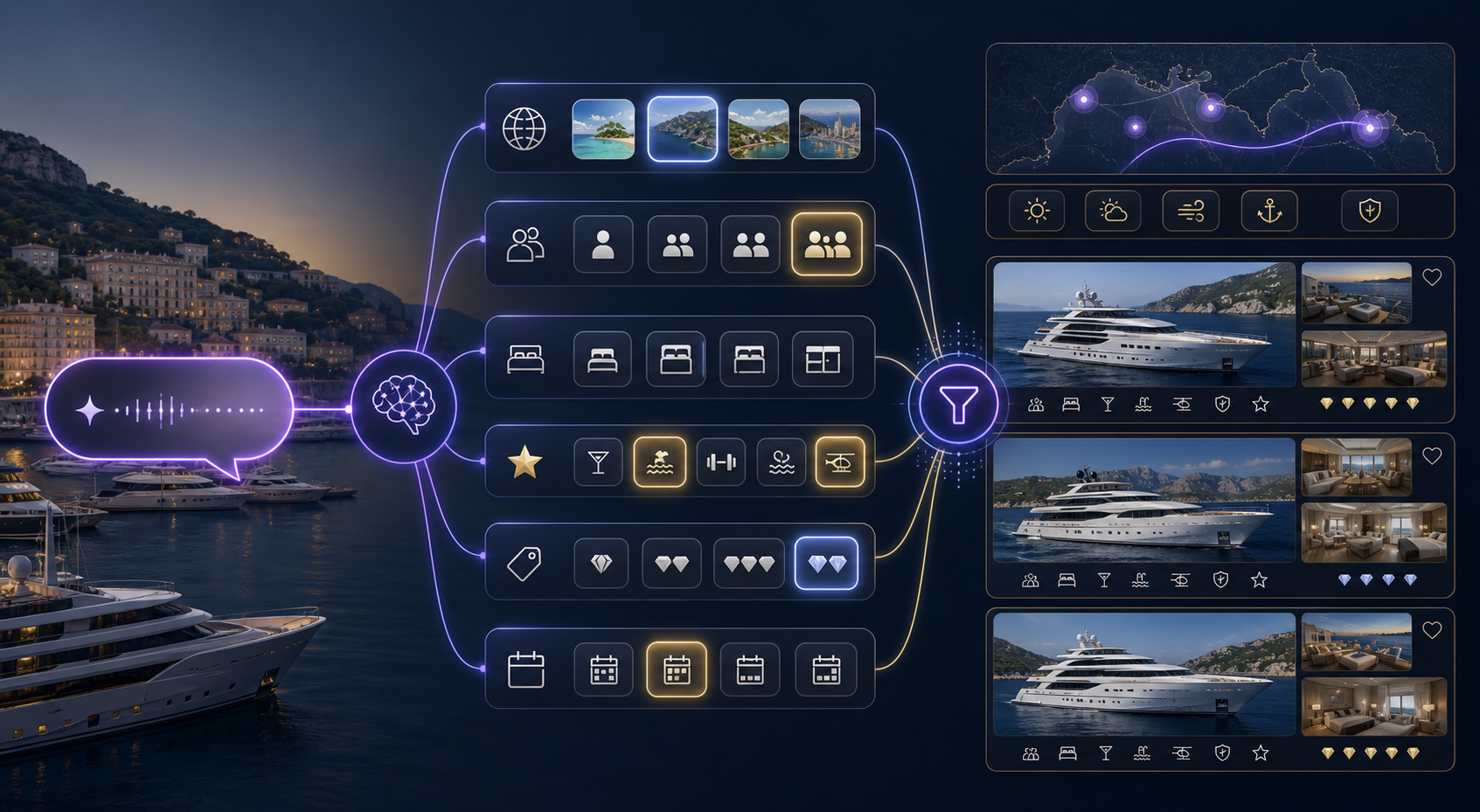
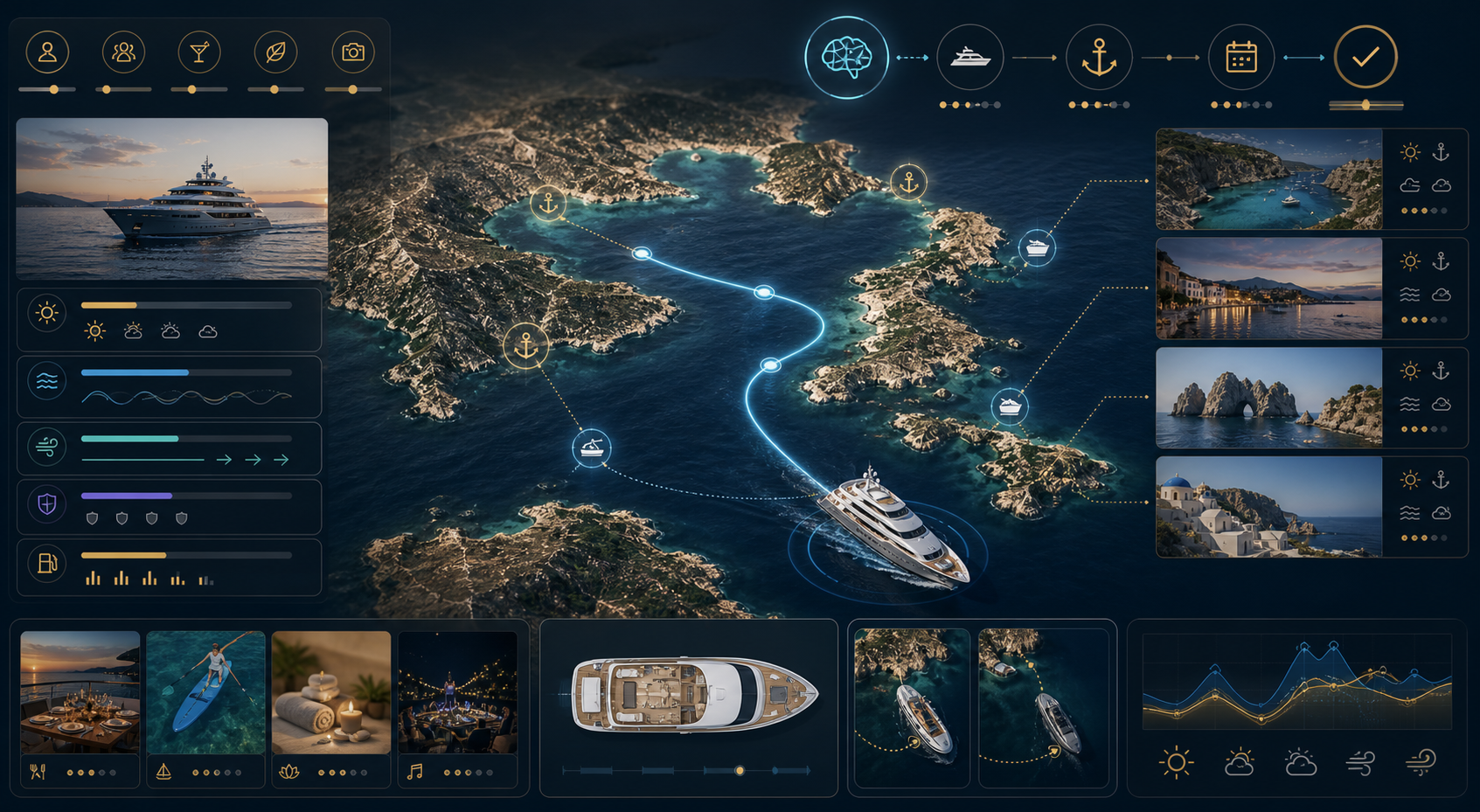
The first major use case is yacht matching. Instead of forcing users through rigid filters, an AI layer can interpret intent and suggest a shortlist. The system can consider destination, dates, party size, budget range, cabin layout, onboard style, water toys, wellness amenities, child-friendliness, event type and preferred atmosphere.
For example, two users may both search for a yacht in the South of France. One wants a fast day charter from Monaco with a party mood. Another wants a discreet family itinerary around the Lerins Islands with a calm crew and excellent dining. A standard category page might show the same yachts. An AI-assisted website should not.
The website can also explain why a yacht is a fit. “This yacht suits families because it has flexible cabins, water toys, shaded deck areas and a crew profile aligned with child-friendly service.” That explanation builds trust and helps the broker continue the conversation.
Natural-language search for luxury travelers
Luxury travelers do not always search in database-friendly language. They describe occasions, feelings and constraints. AI search can transform a natural request into structured search parameters.
A strong yacht charter search experience should understand queries like:
- “A romantic three-day charter from Cannes with quiet anchorages.”
- “A yacht for eight guests near Ibiza with a beach club and Seabobs.”
- “A corporate event yacht in Monaco during Grand Prix week.”
- “A wellness-focused superyacht with chef-led dining in Greece.”
This type of search can improve both user experience and SEO. As search behavior becomes more conversational, websites that answer precise travel intent have an advantage. McKinsey’s 2025 AI survey also notes that organizations are increasingly using AI across marketing, sales, customer service and knowledge workflows. Yacht charter sites sit exactly at that intersection.
AI itinerary planning and destination content
Destination content is a core part of yacht charter SEO. But generic destination pages are no longer enough. AI can help create richer itinerary logic: where to embark, how long each passage takes, which anchorages suit families, where to plan lunch ashore, which days are weather-sensitive and which yacht features matter for the route.
A charter website can use AI to generate draft itineraries, then have brokers or destination experts review them. This gives the site scalable content while preserving accuracy. It also helps users imagine the charter before they speak to a broker.
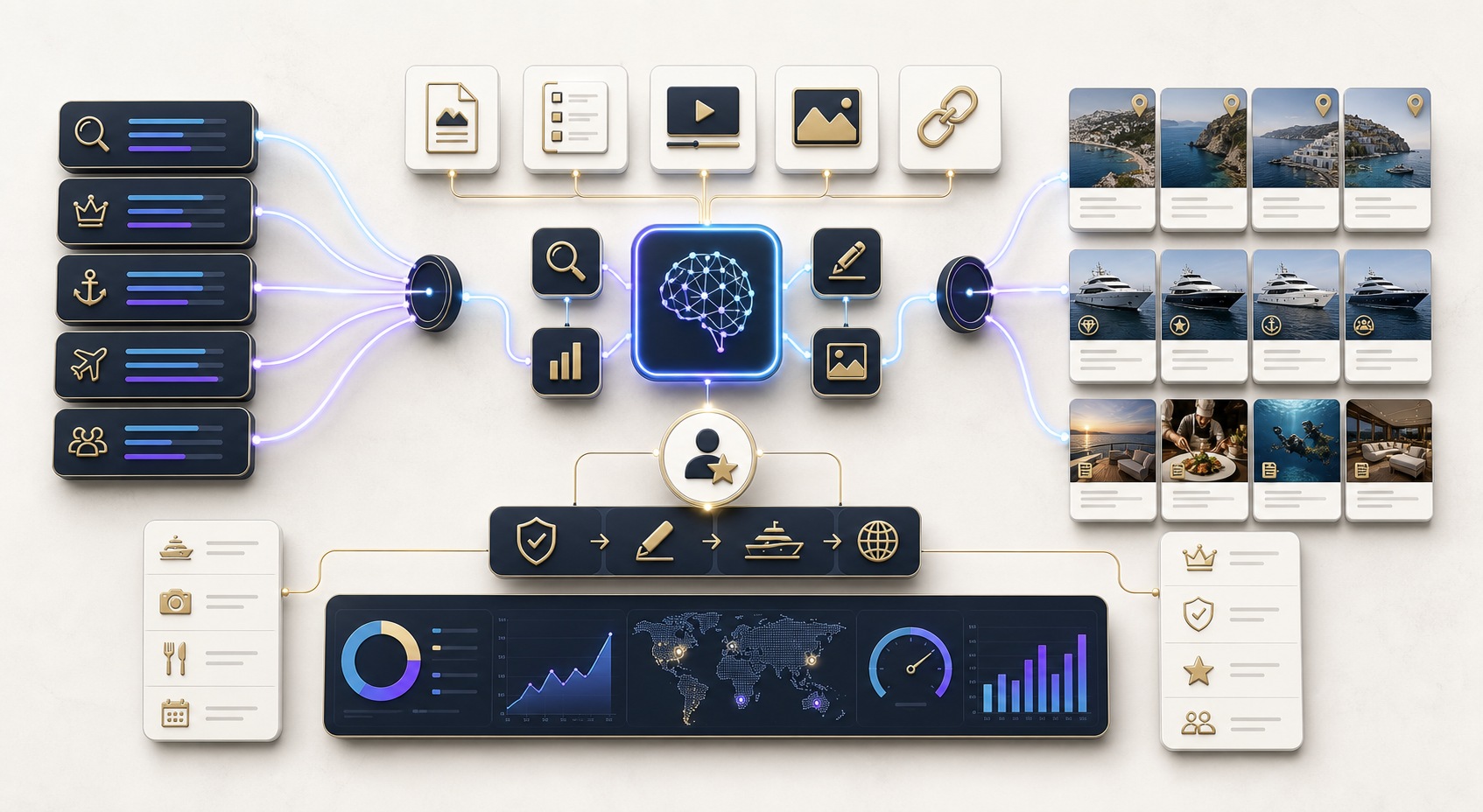
For Nextis AI, the important point is workflow design. AI should not publish unreviewed destination copy at scale. It should support a content operation where source data, yacht inventory, destination expertise and SEO briefs are connected. That produces pages that are more useful for humans and more credible for AI search engines.
Lead qualification without killing the luxury experience
High-ticket luxury leads need careful handling. A bad chatbot can cheapen the brand instantly. But a well-designed AI concierge can qualify leads discreetly.
Instead of asking twenty form questions, the site can guide the visitor conversationally:
- Preferred region and dates.
- Number of guests and cabins.
- Occasion and onboard mood.
- Budget range or yacht size expectation.
- Must-have amenities.
- Previous charter experience.
- Preferred communication channel.
The output should go directly into the CRM as a structured broker brief. The broker receives context, not just a name and phone number. This helps the human follow-up feel faster and more personal.
Deloitte’s hospitality research points in the same direction: AI is expected to affect customer interaction, guest engagement and personalization. In luxury charter, personalization must be handled with restraint. The client should feel understood, not tracked.
CRM enrichment and broker productivity
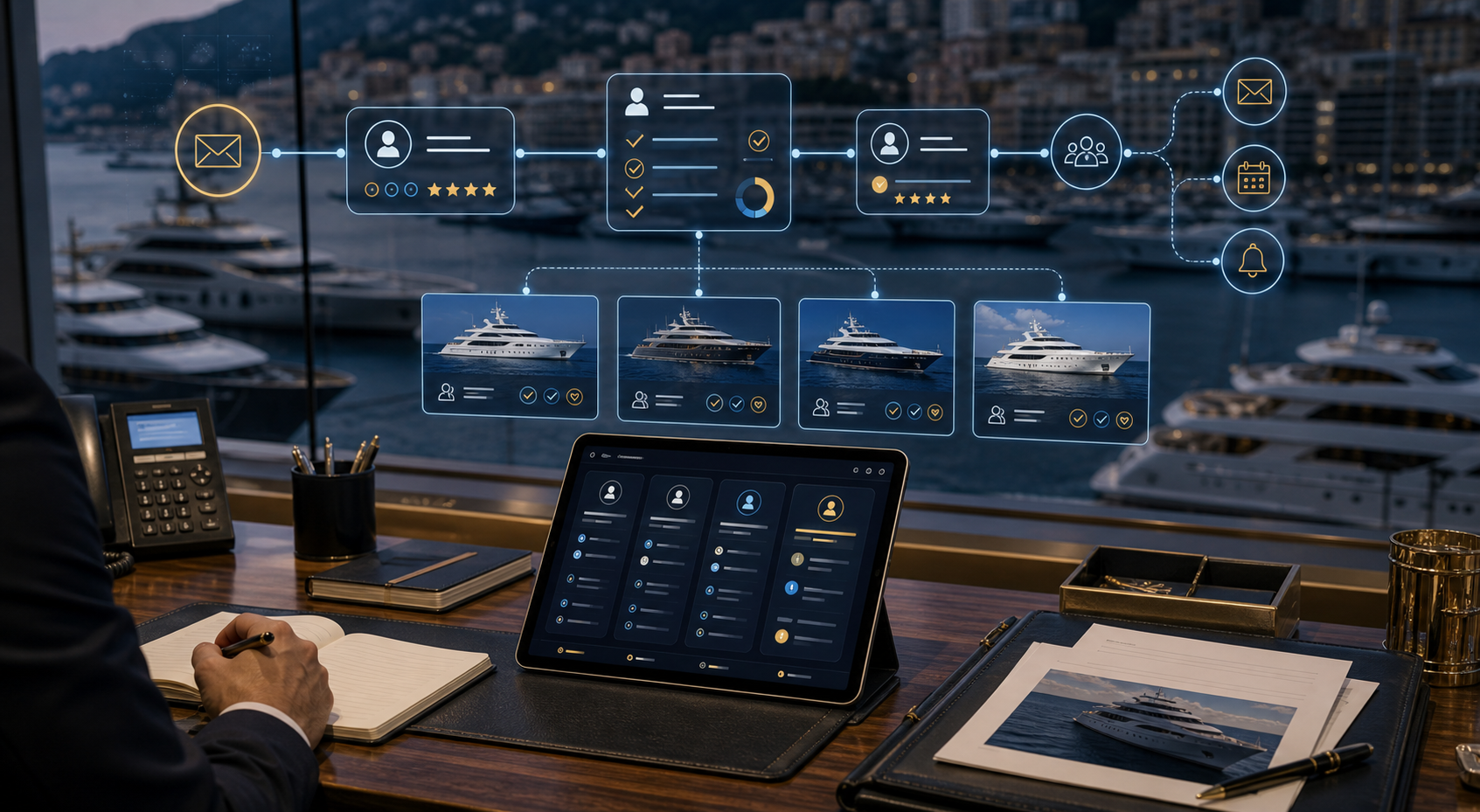
The biggest hidden opportunity is not the public chatbot. It is the back-office workflow. AI can summarize inquiries, tag lead intent, detect urgency, enrich CRM records, propose next actions and draft broker responses.
A yacht charter broker may receive leads from organic search, paid ads, WhatsApp, email, Instagram, partner brokers and repeat clients. Without automation, valuable context gets lost. AI can help standardize lead records and surface the best next step.
Examples:
- Detect whether a lead is family, corporate, event, romantic or adventure-focused.
- Compare the request against available yachts and flag mismatches.
- Draft a first-response email with three yacht options.
- Suggest destination alternatives when dates or budget are unrealistic.
- Remind the broker when a hot lead has not been followed up.
This is where AI becomes commercially useful. The website stops being a brochure and becomes a sales intelligence layer.
Personalized content and SEO at scale
Yacht charter SEO is competitive because destinations, yacht categories and luxury keywords overlap. AI can help expand content coverage, but quality control matters.
Useful AI-assisted page types include:
- Destination guides for Monaco, Cannes, Sardinia, Ibiza, Mallorca, Greece and Croatia.
- Use-case pages such as family yacht charter, event charter, corporate charter and wellness charter.
- Yacht category pages around motor yachts, sailing yachts, explorer yachts and day charter.
- Seasonal pages for summer Mediterranean demand and event-led searches.
- Comparison content for destinations, yacht sizes and charter styles.
The risk is thin content. AI should be paired with original data: yacht availability patterns, broker notes, destination logistics, marina constraints, seasonal weather patterns and real client questions. That is what makes content valuable.
AI for pricing signals and demand intelligence
Pricing in yacht charter is shaped by seasonality, availability, events, yacht size, reputation, destination and negotiation context. AI can help charter businesses detect demand signals and plan content or sales activity around them.
For example, a site can monitor search interest around Monaco Grand Prix, Cannes Film Festival, Ibiza summer weeks or last-minute August availability. The team can then create landing pages, broker campaigns or availability updates before competitors react.
This does not mean fully automated pricing. Luxury charter pricing requires discretion, negotiation and relationship management. But AI can help teams see demand patterns earlier.

Trust, privacy and brand control
AI adoption in yacht charter must be governed carefully. Charter clients may be high-net-worth individuals, executives, public figures or families who value discretion. The website may process sensitive preferences, travel dates, guest lists and communication history.
That means every AI workflow needs clear rules:
- What data can the model access?
- Which responses require human approval?
- How is personal data stored and deleted?
- Can the AI invent yacht availability or pricing?
- How are broker notes protected?
- How does the brand prevent generic or off-tone content?
The safest approach is human-in-the-loop. AI drafts, summarizes and recommends. The broker validates, personalizes and owns the client relationship.
A practical AI roadmap for yacht charter websites
A yacht charter website does not need to implement everything at once. The best roadmap is staged.
- Start with lead intake: convert forms and chat into structured CRM briefs.
- Add AI-assisted broker responses for faster follow-up.
- Build natural-language search for yacht and destination matching.
- Create reviewed AI-assisted itinerary pages for SEO and conversion.
- Connect CRM history with personalization for repeat clients.
- Add reporting around lead quality, response time, conversion and content performance.
Nextis AI can help design these workflows for luxury businesses that need both automation and brand control. The goal is not to make the charter journey feel robotic. The goal is to make the digital journey feel as responsive and precise as a great broker.
FAQ
Can AI replace yacht charter brokers?
No. AI can qualify leads, suggest yachts, draft responses and support itinerary planning, but high-value charter decisions still require human expertise, negotiation and trust.
What is the best first AI feature for a yacht charter website?
The best first feature is usually AI-assisted lead qualification connected to the CRM. It creates immediate commercial value without changing the entire website experience.
Can AI improve yacht charter SEO?
Yes, if it supports expert-reviewed destination and itinerary content. Unedited generic AI content can hurt trust, but AI plus broker knowledge can produce useful long-tail pages at scale.
Is AI safe for luxury client data?
It can be, but only with strong data governance. Yacht charter websites should control what data enters AI systems, protect CRM records and keep sensitive client details out of unmanaged tools.