Apple has described Minions, a research infrastructure that combines unused GPU capacity from multiple Apple Silicon Macs for machine-learning inference. Instead of requiring every computer to remain continuously available, the architecture divides incoming requests into smaller tasks and returns interrupted work to a central queue, according to Next INpact’s account of the research.
The announcement concerns a research preprint rather than a released commercial service. Its immediate relevance for SME operations teams is therefore architectural: it shows how a collection of existing Macs could act as a shared inference resource without giving every participating machine direct control of the job database.
A central server turns requests into queued tasks
Minions begins with a central server that accepts requests through a web interface or REST APIs. The server validates each request, divides it asynchronously into subtasks and records them in a PostgreSQL database. In practical terms, this component creates and manages the work queue, as Next INpact explains.
This separation matters because the participating Macs do not need to coordinate inference jobs among themselves. They request available work from the server. A database uniqueness constraint is used when reserving a subtask, preventing the same queued item from being assigned through competing claims, according to the same report.
For a commercial operations workload, the relevant unit would be a divisible inference job rather than an interactive request that must stay attached to one machine. A hypothetical example is processing a collection of product documents through the same local model: the server could split the collection into independent items, while available Macs handle separate portions. The source does not report performance for that scenario, so it should be treated as an architectural fit rather than a demonstrated result.

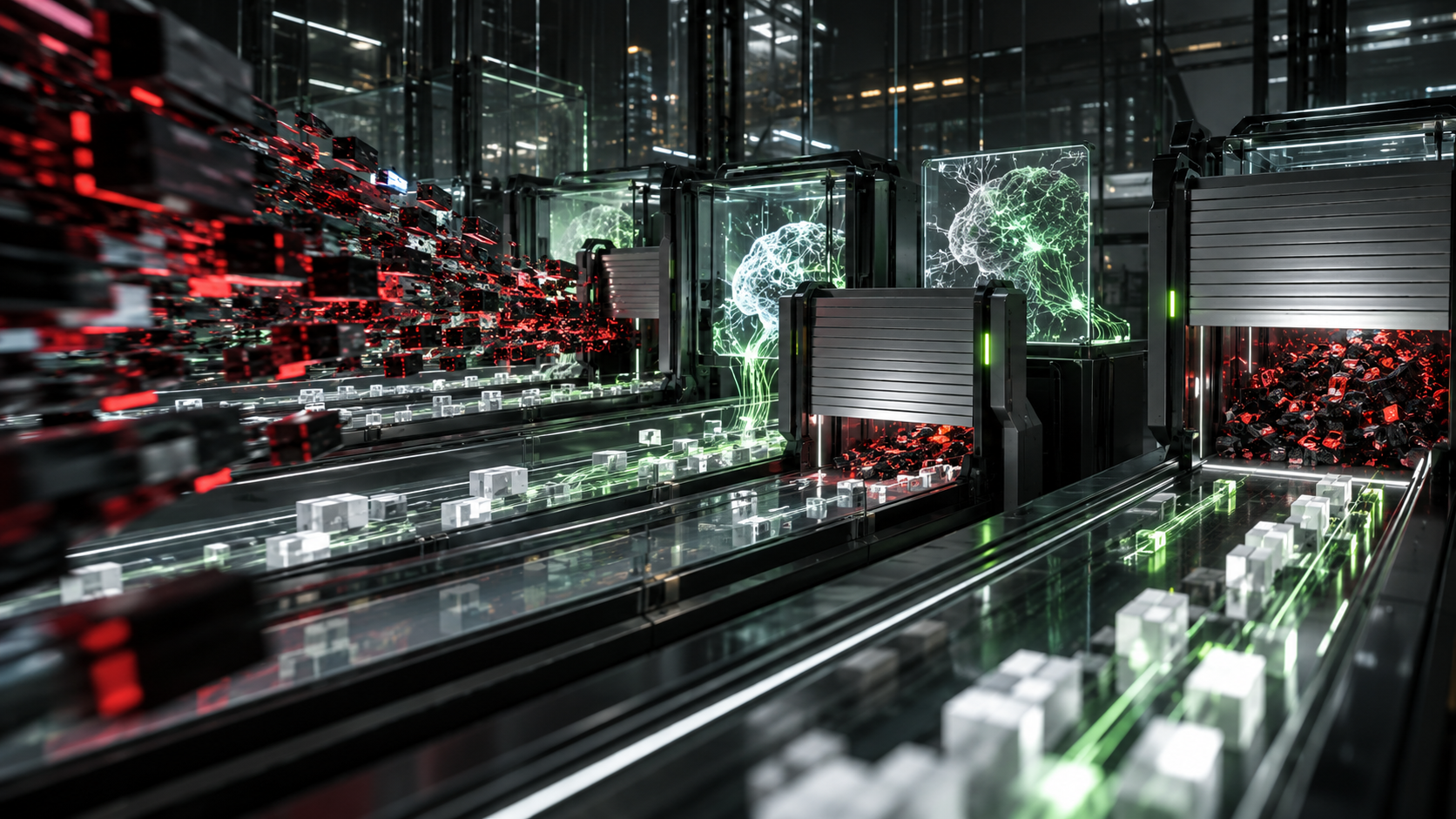
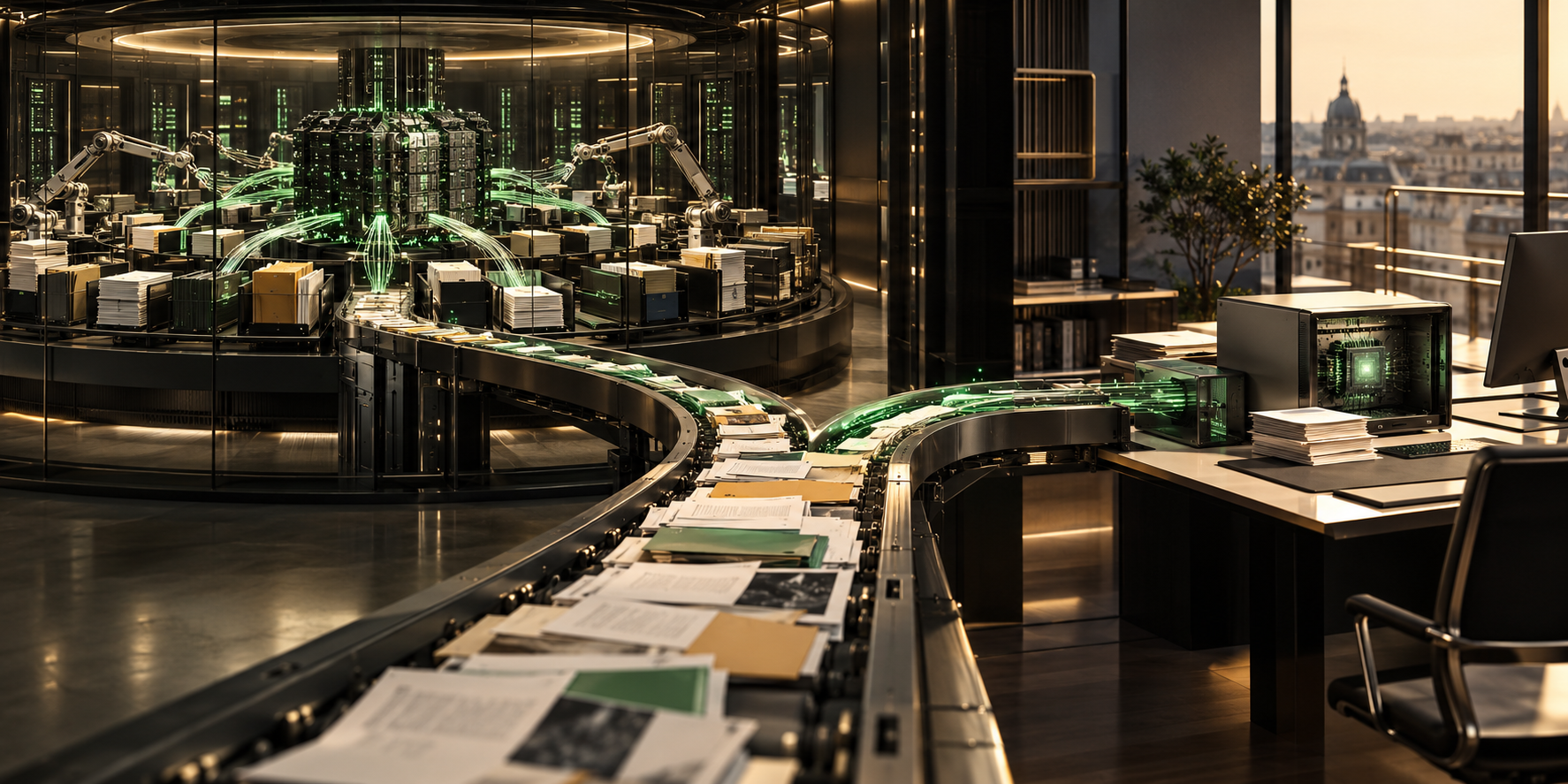
Conceptual illustration, not a photograph, of Minions dividing an inference request into centrally queued tasks.
Each Mac processes a subtask without database access
Executor software runs on every Mac contributing compute capacity. An executor claims a subtask through the server API, performs the calculation locally on its GPU and writes the resulting output to S3-compatible storage. It also uses the API to update status and send a heartbeat; it never connects directly to PostgreSQL, according to the published account.
Apple Silicon is relevant because its unified memory can be used by both CPU and GPU components. Next INpact notes that this memory is slower than the dedicated video memory found on discrete graphics cards, but that its available capacity can suit local execution of larger language models. Minions extends that local characteristic across a collection of machines; it does not turn their memory into one physically shared pool.
The distinction defines the useful workload. Every executor receives a bounded task that it can complete with its own local resources. The reported architecture does not establish that a model too large for one participating Mac can automatically span the memory of several Macs during a single inference operation.
Watchdog recovers work from unavailable machines
A component called Watchdog monitors executors while they are processing tasks. When an executor stops sending its heartbeat, Watchdog puts its unfinished subtask back into the queue. The report identifies network loss, sleep, shutdown and voluntary interruption as reasons a Mac may become silent.
That recovery mechanism is what allows Minions to use machines whose availability changes. The system does not require an interrupted Mac to resume the task itself; another executor can claim the requeued work. A separate dashboard provides real-time monitoring of the overall system, according to Next INpact.
Recovery still has an operational cost: work completed after the last recorded state may need to be performed again. The available report does not quantify that duplication, the scheduling overhead or the effect of frequent sleep and network interruptions. Those missing measurements matter when comparing opportunistic capacity with machines reserved for inference.

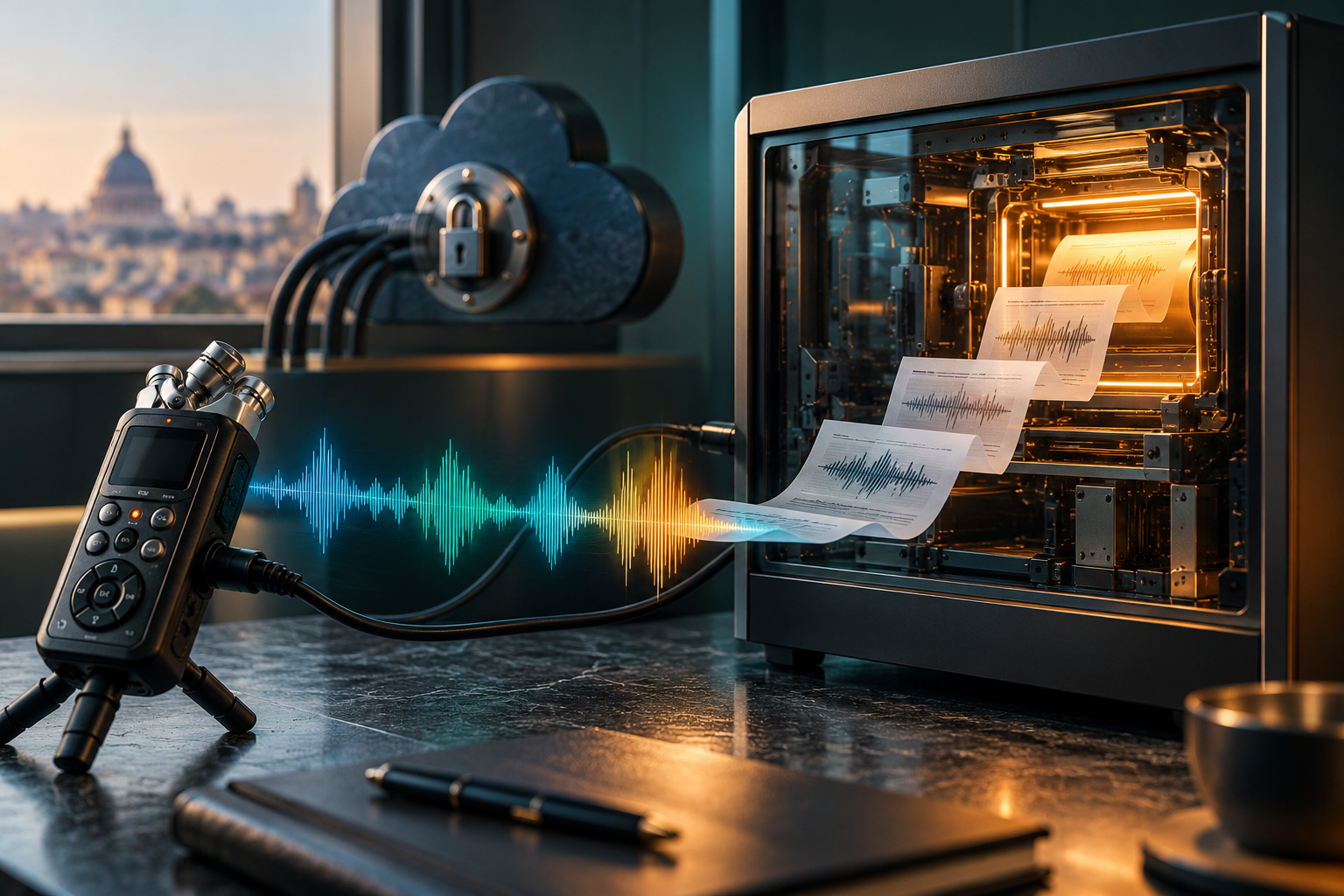
Conceptual illustration, not a photograph, of Watchdog requeuing a task after an executor becomes unavailable.
The clearest fit is divisible local inference
Minions presents a concrete way to aggregate underused Mac GPUs, but the architecture depends on work that can be separated into independent subtasks and dispatched asynchronously. That points toward batch inference, document processing and other queues of self-contained items rather than latency-sensitive conversations or calculations requiring tightly coupled GPUs.
The central server, PostgreSQL queue and object storage also remain necessary even though inference runs on individual Macs. Minions therefore redistributes computation; it does not remove the need for coordination infrastructure.
The decision for an SME is narrow: assess whether an existing inference workload can be divided into recoverable tasks that fit on individual Apple Silicon machines. Before treating idle Macs as usable capacity, the evidence still needed is measured throughput, interruption overhead and model compatibility under the organisation’s actual workload.