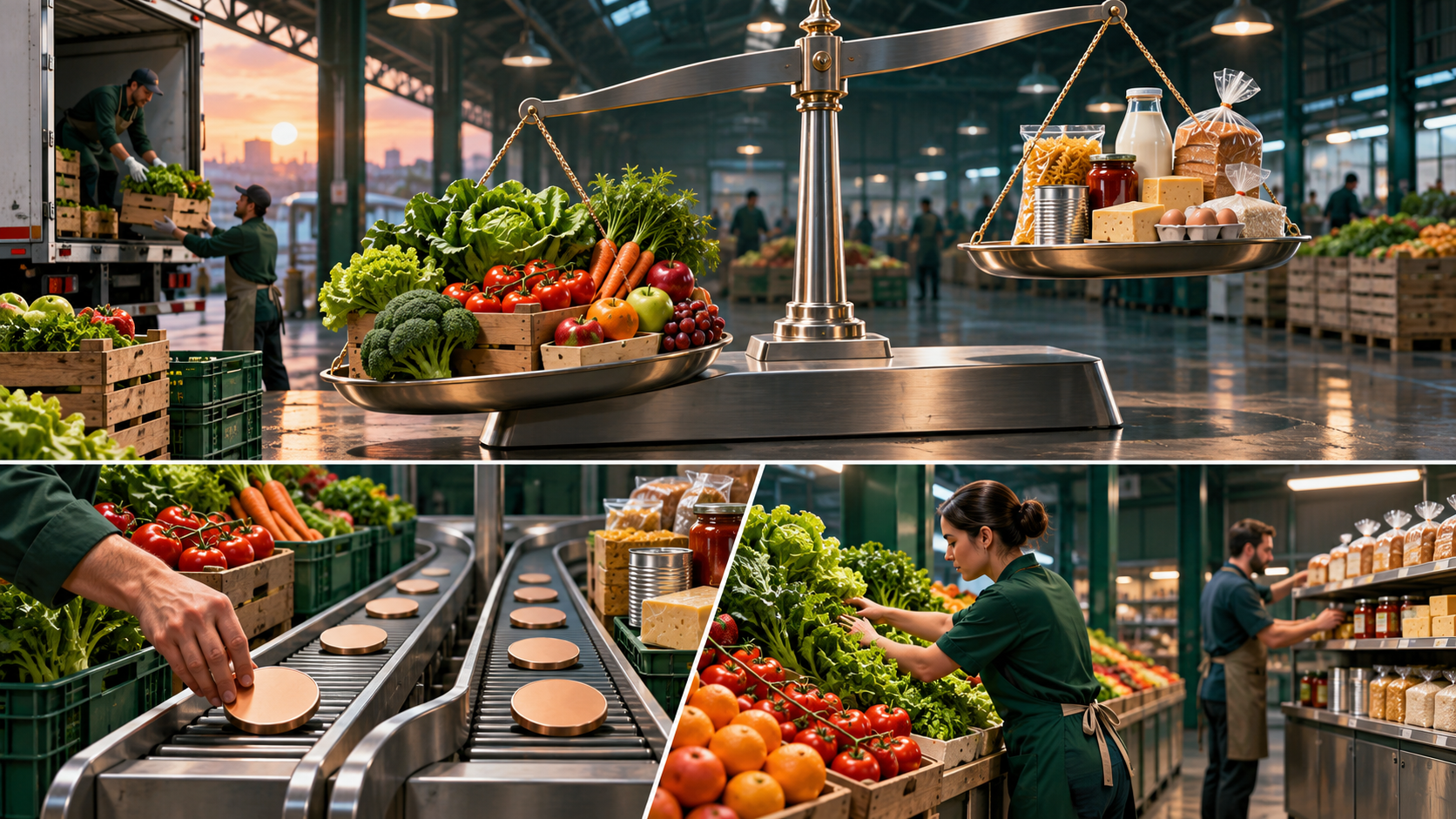
Food prices in France rose by 1.3% year on year in November, while fresh-product prices increased by 9.4% compared with November 2025, according to figures reported by Le Monde. The immediate operational fact is therefore not merely that food is becoming more expensive: the movement is substantially different across product categories.
Commerce Minister Serge Papin described a further increase in food prices as “inevitable,” according to the same Le Monde report. His statement is a warning about direction, not a supplier quote, a timetable or a category-by-category forecast. Food retailers, caterers and hospitality operators still need to identify where their own exposure sits.
Fresh products are moving faster than the overall basket
The reported figures describe two different measurement levels. Overall food inflation combines multiple categories into one indicator. Fresh-product inflation isolates a segment whose prices moved faster over the same annual comparison. Le Monde attributes the broader increase notably to fresh products.
This distinction matters because an aggregate rate does not apply uniformly to every item. A business buying mostly shelf-stable products does not have the same purchasing mix as a restaurant using fresh produce daily. The national indicator describes the market at a high level; each operator’s basket determines how that movement reaches purchasing costs.
The mechanism is weighting. When one category moves faster than others, its effect on a business depends on how much of that category the business buys and how frequently it must replenish it. Commercial teams therefore gain more from mapping exposed products than from applying the overall food rate mechanically to every offer.

Conceptual illustration of a faster-moving fresh category within an aggregate food basket.
A national average does not price an individual basket
A blanket price update can conceal two opposite errors. It can understate pressure on offers containing a high share of fresh ingredients, while overstating pressure on offers with limited exposure to that category. The source establishes the gap between overall food and fresh-product movements, but it does not provide the purchasing mix of any individual SME.
Consider a hypothetical catering company selling a seasonal lunch range and a packaged-snack range. If fresh ingredients represent a larger share of the first range, using one identical adjustment across both ranges would disconnect the decision from the reported category difference. The appropriate comparison would be between the current supplier cost of each input and the cost embedded in the existing selling price.
That exercise does not require a new forecasting model. It requires separating products by their actual input composition, purchase frequency and current supplier terms. The result can show where a margin assumption has become outdated without treating every item as equally affected.
Price reviews should start with exposed offers
For commercial operations, the minister’s warning is most useful as a trigger for a targeted review. Start with offers whose economics depend heavily on fresh food, then compare current purchasing documents with the costs used when those offers were last priced. Items with low exposure can remain outside the first review unless their own supplier data shows a change.
The same logic applies to quotations and recurring contracts. A quote prepared from an old ingredient baseline can become inaccurate before a broad catalogue update is necessary. Conversely, the national figures alone do not justify changing a contracted price: the relevant commercial terms and documented input costs still govern that decision.
Assortment decisions also need item-level evidence. Removing a fresh product, changing a recipe or substituting an ingredient affects the customer proposition as well as cost. The reported inflation gap identifies where to investigate; it does not establish which operational response preserves demand, quality or margin.
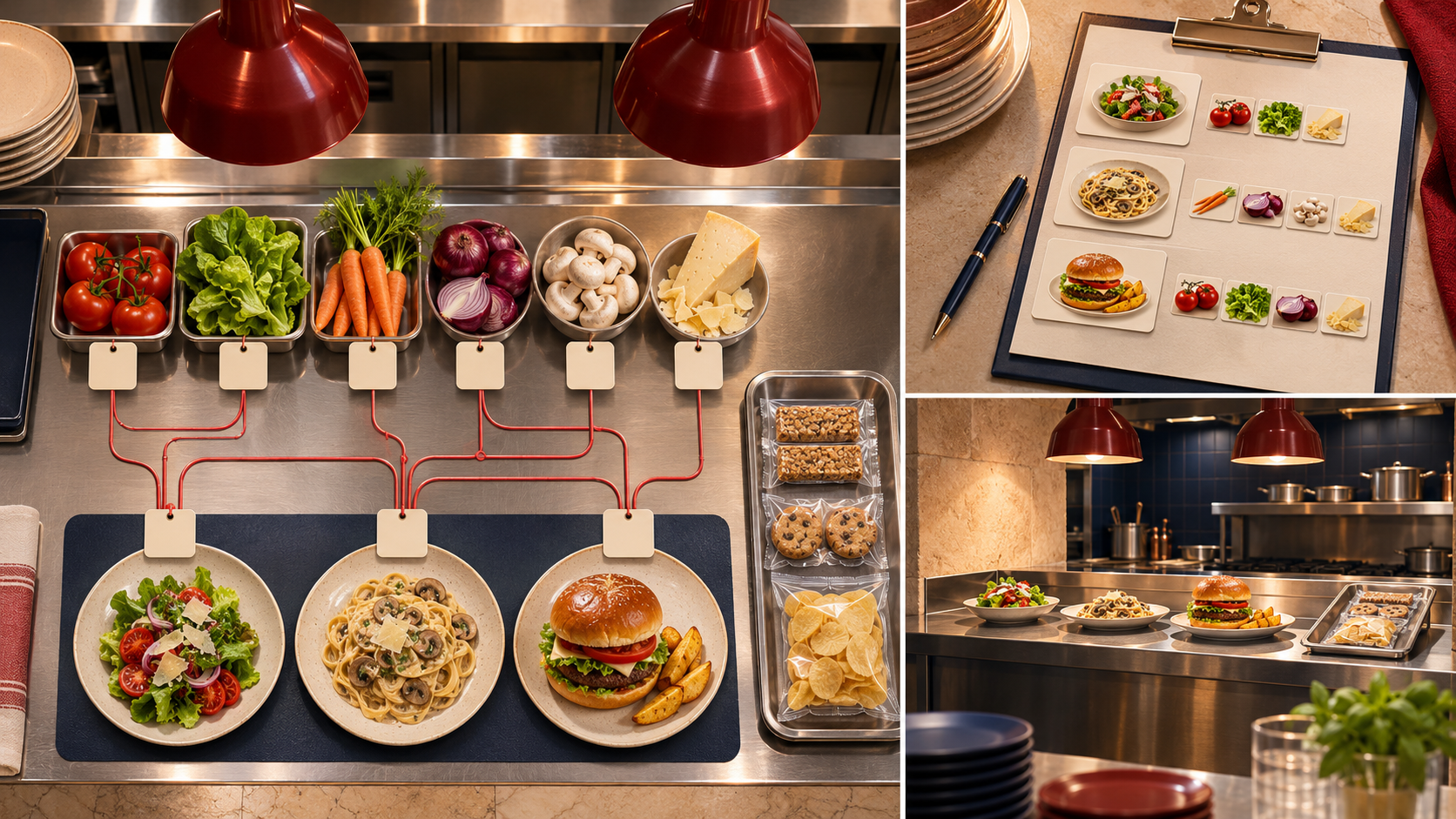
Conceptual illustration of an item-level price review based on fresh-ingredient exposure.
The warning does not specify the next increase
Papin’s statement establishes his assessment that higher food prices are unavoidable, while the reported data establishes the recent annual movement. Neither element supplies the size, date or product composition of a future increase. The source reports the minister’s direction-of-travel warning alongside the latest food-price figures, but it does not replace order-level information from suppliers.
The practical decision is narrow: review fresh-product exposure first, using current purchasing records rather than spreading a national average across the entire range. The next evidence to monitor is whether supplier quotations confirm additional increases in the specific ingredients and products that determine each offer’s economics.