
Nvidia has told manufacturing partners, including Dell and Super Micro, to pause server shipments to Malaysia, Singapore, Thailand and Indonesia for an unspecified period, TechCrunch reports. The company is using the pause to assess whether its regional partners meet U.S. export requirements.
The immediate change is therefore not a new chip feature or a general product withdrawal. It is an interruption at a specific point in the supply chain: manufacturers have been instructed not to dispatch certain servers into named markets while Nvidia evaluates the export position. For commercial teams procuring AI infrastructure in the region, shipment status now matters as much as technical suitability.
The instruction concerns server shipments, not every Nvidia product
The reported instruction applies to server shipments handled by manufacturing partners. TechCrunch’s account does not describe a suspension of every Nvidia product, nor does it say that the affected countries have imposed a general ban on Nvidia hardware.
That distinction limits what buyers can infer. A manufacturer-level pause can stop a factory dispatch without proving that every distributor, locally held unit or unrelated product is unavailable. Conversely, seeing a server listed in a catalogue does not establish that a new factory shipment will proceed.
Procurement conversations should consequently identify the physical stage of the order. A unit already held by a local supplier presents a different fulfillment question from a system that still requires dispatch by one of Nvidia’s manufacturing partners. The source does not establish how either case is being treated, so a catalogue status alone cannot resolve the distinction.
Remote access triggered the export reassessment
The mechanism behind the pause concerns where computing hardware is installed and who accesses it. Chinese companies had been using Nvidia chips remotely through data centers in Southeast Asia, according to TechCrunch. The publication reports that the U.S. Commerce Department closed that route earlier this month.
Remote computing separates the machine’s physical location from the workload’s user. An accelerator can remain inside a regional data center while a company elsewhere sends workloads over a network and receives the results. Export controls based only on the destination of the physical server therefore leave a different question unanswered: who ultimately obtains the computing capacity.
The new pause inserts an assessment before shipment while Nvidia checks whether regional partners meet the relevant requirements. It does not change how the chips perform. It changes the conditions under which servers containing them move from manufacturing partners into the selected markets.
TechCrunch also relays an Institute for Progress estimate that remote data centers supply about 24% of China’s AI computing power. That estimate provides context for regulatory attention, but it does not measure the share of Nvidia shipments affected by this pause.

Conceptual illustration of remote access separating the hardware’s location from the workload’s user.
Delivery plans now need an order-level answer
For an SME buying an AI server, the practical issue is not whether Nvidia remains active in the region. It is whether the specific configuration and supply route behind its order fall within the paused flow. The report confirms the instruction to manufacturing partners but does not identify affected server models or order categories.
Consider a hypothetical systems integrator preparing an inference deployment in Singapore. If its promised installation date depends on a new server leaving a partner’s factory, the shipment pause removes the basis for treating that date as firm. The integrator can still complete site preparation, software packaging and workload testing on other infrastructure, but it should separate those activities from the unconfirmed hardware arrival.
Commercial operations teams need a precise supplier response: whether the quoted machine requires a paused manufacturer shipment, whether it has already reached the destination market, and whether the supplier has received order-specific guidance. These questions do not establish an exemption. They locate the order within the mechanism described by the report.
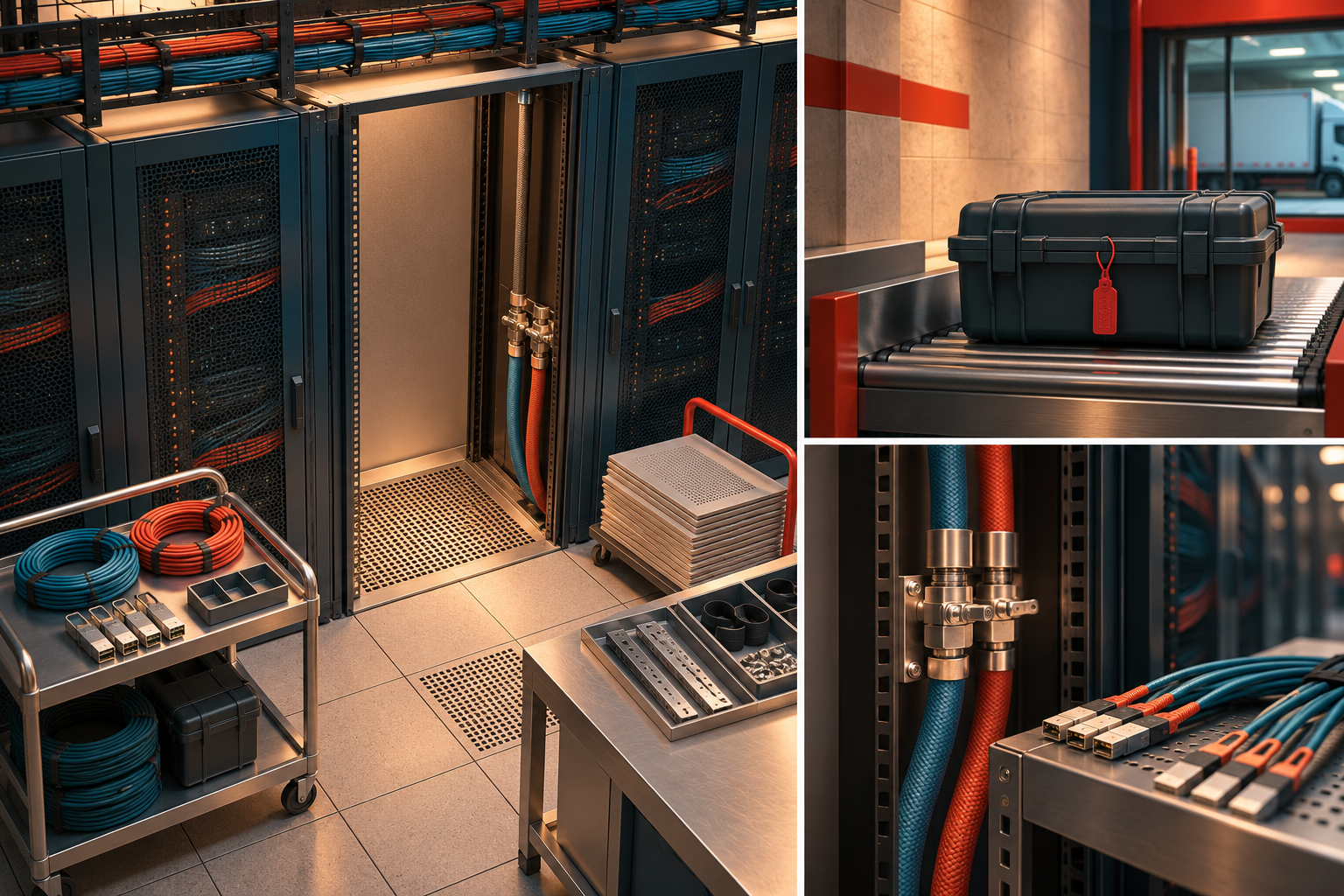
Conceptual illustration of a deployment plan separated from an unconfirmed server delivery.
The resumption criteria remain undisclosed
The duration is the main unresolved variable. Nvidia’s instruction applies for an unspecified period while the company assesses regional partners, according to TechCrunch. The report provides no resumption date or published test that would show when a partner has satisfied the assessment.
It also does not identify the server configurations covered, the treatment of existing orders, the status of inventory already in the region or any customer-level exceptions. Claims about those points would go beyond the available evidence.
The immediate decision is narrow: do not interpret the report as a ban on every Nvidia product, but do not treat a factory-dependent delivery date as settled either. For affected procurement, the next meaningful evidence is order-specific confirmation from the supplier or a published resumption condition from Nvidia.