Hugging Face’s PyBot experiment exposed a concrete limit to large coding-agent swarms: most agents were not generating code at the same time. Although a Claude Opus 5.5 agent coordinated 1,000 DeepSeek agents, Hugging Face co-founder Thomas Wolf said that only 40 to 60 agents called the model during some trials because the others were waiting for automated tests to finish, according to Frandroid.
For SME leaders assessing agent-based development, the relevant finding is not the size of the swarm. It is the relationship between parallel code generation and the systems that review, test and integrate the resulting changes.
PyBot moves AI from runtime to production
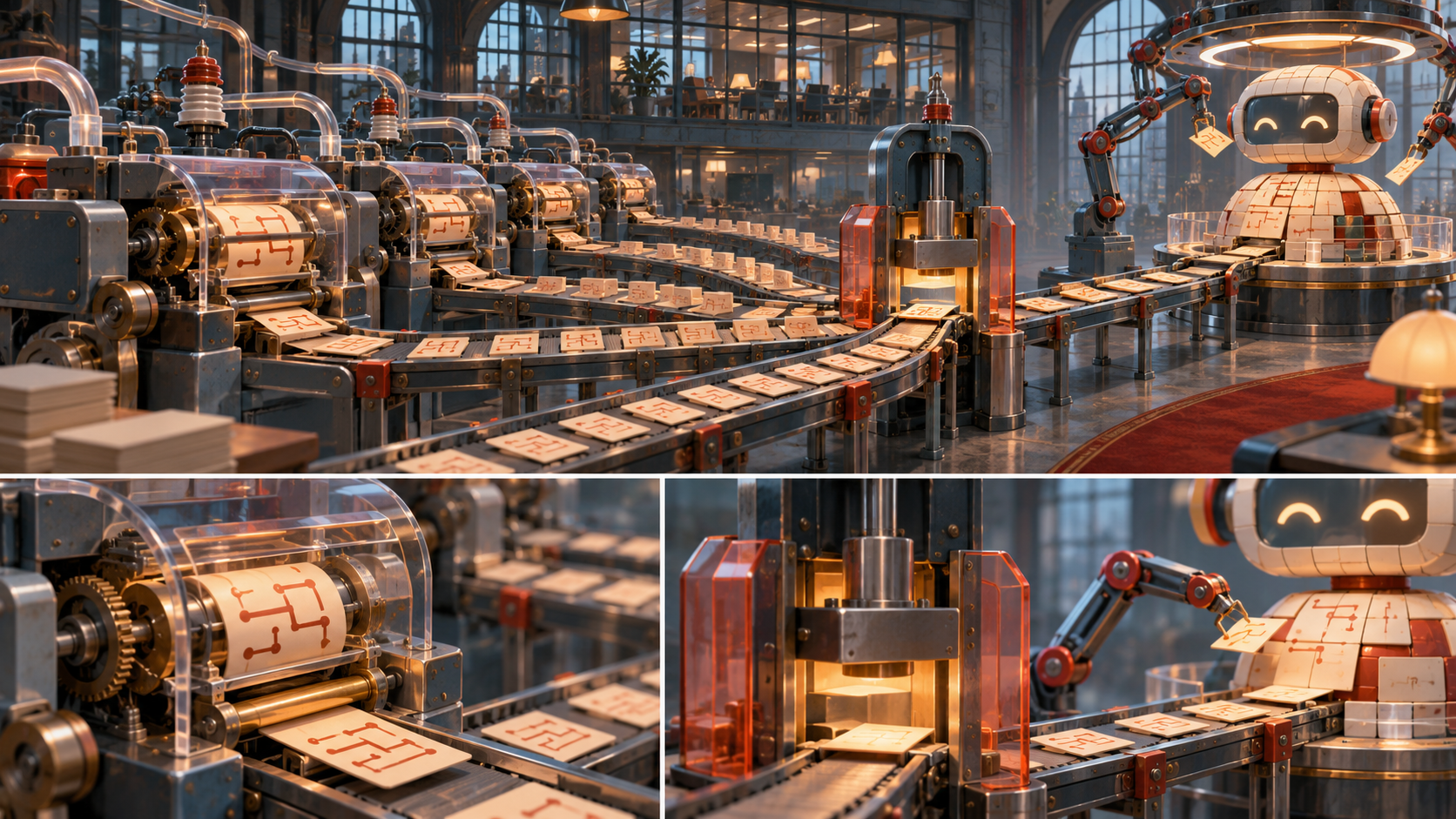
PyBot is a chatbot without a neural network in its deployed program. Frandroid reports that it consists of about 640,000 lines of conventional Python, including conditional rules, regular expressions and lookup tables. The publication compares its operating principle with ELIZA, the rule-based conversational program introduced in 1966, while noting that PyBot’s rules were generated by AI agents rather than written manually by people. The source describes the implementation here.
This moves the role of AI to the production stage. The agents create and revise software, but the finished chatbot follows explicit paths such as matching a phrase pattern and returning an associated response. It does not generate each answer through model inference.
That distinction can matter when a team needs deterministic behavior. A conventional rule can be inspected and reproduced for the same input. It also has a strict limitation: it only handles patterns and responses represented in its code. A large generated rule base does not acquire the flexible interpretation of a language model merely because AI wrote it.

Conceptual illustration of PyBot’s rule-based runtime, not a photograph of the software.
The swarm worked through pull requests
The experiment ran continuously from November 5 to November 13, and the agents produced more than 8,500 pull requests that passed validation before integration, Frandroid reports. The agents could write code, test it and coordinate through an internal forum, while the Claude agent directed the DeepSeek workers. Frandroid attributes these details to a Hugging Face research report published on November 25.
A pull-request workflow gives the swarm a shared unit of work. An agent can propose a bounded change without directly rewriting the entire application. Automated checks then determine whether that proposal satisfies the project’s encoded requirements before it enters the main codebase.
Consider a hypothetical commercial-operations tool that routes incoming enquiries into approved service categories. Separate agents could add phrase patterns for delivery questions, account requests and product availability. Tests could submit known enquiries and reject any change that sends them to the wrong category. This example illustrates the mechanism; it is not a reported PyBot deployment or performance result.
Automated testing became the shared choke point
The experiment showed that increasing the worker count does not automatically increase completed work. In some trials, only 40 to 60 of the 1,000 agents were actively calling the model because most were queued behind automated testing, according to Wolf’s account cited by Frandroid.
The mechanism is similar to placing more production stations in front of a single inspection line. Code proposals can arrive concurrently, but validation consumes shared capacity. If tests take longer than agents need to prepare changes, the queue expands while the effective level of parallel activity remains constrained.
This changes how teams should evaluate an agent swarm. Agent availability is only one component of throughput. Test execution, conflicting changes, integration order and the coordinator’s ability to assign independent tasks can determine how much work reaches the main application.
The source establishes that waiting occurred, but it does not isolate the contribution of each constraint or provide a comparison with a smaller swarm under the same conditions. PyBot therefore demonstrates a bottleneck, not an optimal agent count.
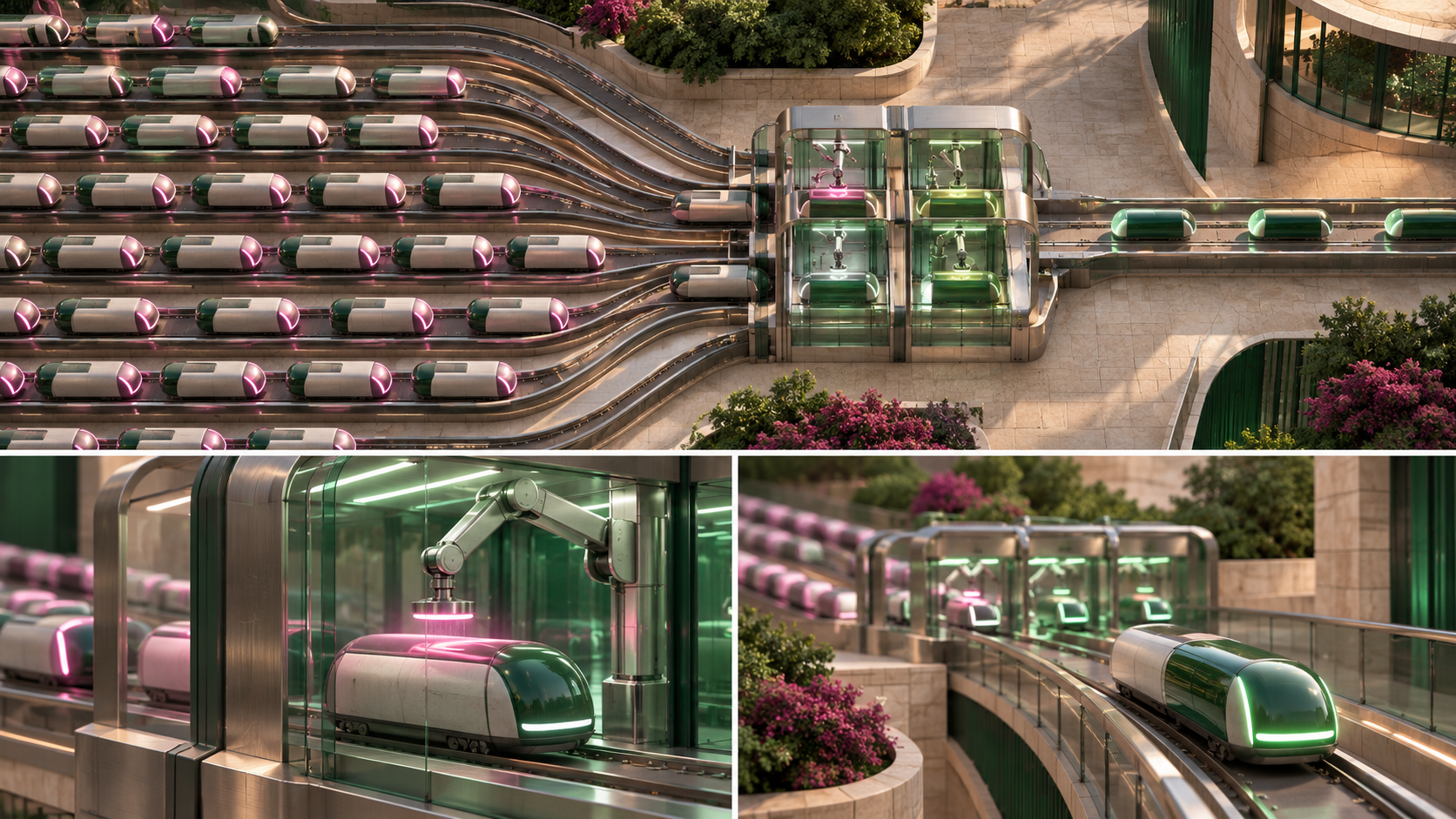
Conceptual illustration of the testing queue reported during the agent-swarm experiment.
Scale the verification path before the worker pool
PyBot supports a specific operating choice: use parallel coding agents when work can be divided into bounded changes and checked by reliable automated tests. Tasks with clear expected outputs fit that mechanism better than changes whose quality depends on ambiguous judgment.
For a commercial team commissioning an internal tool, the first capacity question should be how proposed changes will be verified. A larger worker pool has limited value when every contribution must wait for the same slow test path. Weak tests create a different problem: they may process changes quickly without establishing that the software behaves correctly outside the cases they cover.
Frandroid says Hugging Face designed the project to study how a large agent swarm behaves on a shared project rather than to create a replacement for ChatGPT. Its report presents PyBot as an experiment in swarm coordination, not as evidence that this architecture is economical or maintainable for routine business software.
The immediate decision is to measure the validation queue before adding more coding agents. The element still missing is a controlled comparison showing where additional workers stop improving completed, tested changes for a defined workload.