TechCrunch’s reviewer found that the iPhone Duo’s defining benefit was not a conventional specification upgrade but a change in daily phone use. After a little under a month, side-by-side apps had become a regular habit, while several anticipated compromises proved less disruptive to the reviewer than expected, according to TechCrunch.
That is evidence from one person’s extended use, not a controlled productivity test. It does, however, identify a specific operating question for SME leaders and commercial teams: whether keeping a task and its communication channel visible together removes enough friction to justify a foldable device.
Dragging an app creates the working pair
The Duo’s side-by-side mode uses a direct gesture. An app can be dragged toward either half of the unfolded display and released into a target area. The reviewer initially doubted that the available space would make this useful, particularly compared with a tablet, but later reported using the arrangement more often than anticipated, as TechCrunch describes.
The practical mechanism is therefore app pairing rather than desktop-style multitasking. The source gives examples of keeping email or Slack beside another activity and placing social reactions alongside news or video. Both applications remain visible, but each receives only part of the unfolded screen.
For a commercial operations role, a hypothetical use would be keeping a customer message visible while checking a document, schedule or product reference in another app. The review supports the interface pattern, but it does not establish faster replies, fewer errors or compatibility with any particular business application.
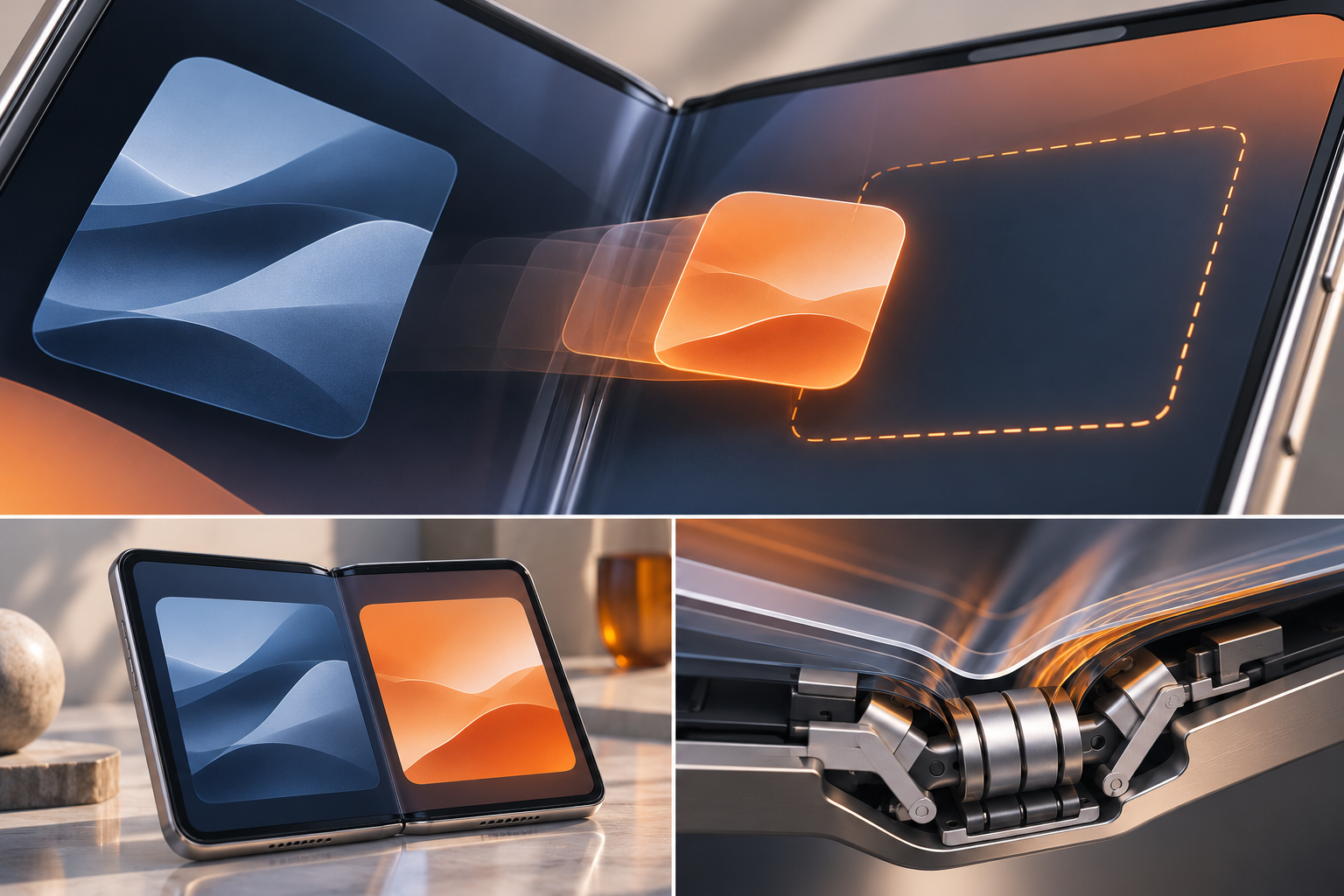
Conceptual illustration of the drag-and-drop mechanism used to pair apps on the unfolded display.
The open screen keeps a second channel visible
On a conventional phone, consulting another app usually replaces the current view. The Duo instead lets the reviewer retain a secondary information channel on the other half of the display. In the reported examples, that channel included real-time reactions beside an article and messages beside an ongoing task, according to TechCrunch.
This changes what can remain visible during mobile work, but it does not remove interruption. Email, Slack or social feeds can occupy persistent screen space and compete with the primary task. The relevant choice is not simply whether the device can show paired apps, but which pair deserves simultaneous attention.
The source also says that most apps were optimized for the Duo during the reviewer’s usage. It does not provide an app-by-app compatibility record, however. A team dependent on a specific ordering, messaging or reporting tool would still need to verify how that interface behaves in the divided layout.
Folded mode restores one-handed handling
The second documented behavior change appears when the Duo is closed. Despite describing the device as heavier, the reviewer found that its folded shape felt closer to a smaller iPhone: it could be covered with one hand, used for thumb typing, reached from top to bottom and placed in front or back pockets. The previous Pro Max consequently felt unusually large by comparison, the review reports.
For staff who move between locations, this creates a distinct usage cycle. Folded mode serves quick handling and short interactions; unfolded mode provides the paired workspace. That conclusion follows from the reported form factor, not from evidence about drops, weather exposure, battery endurance or sustained field operation, which the article does not assess.
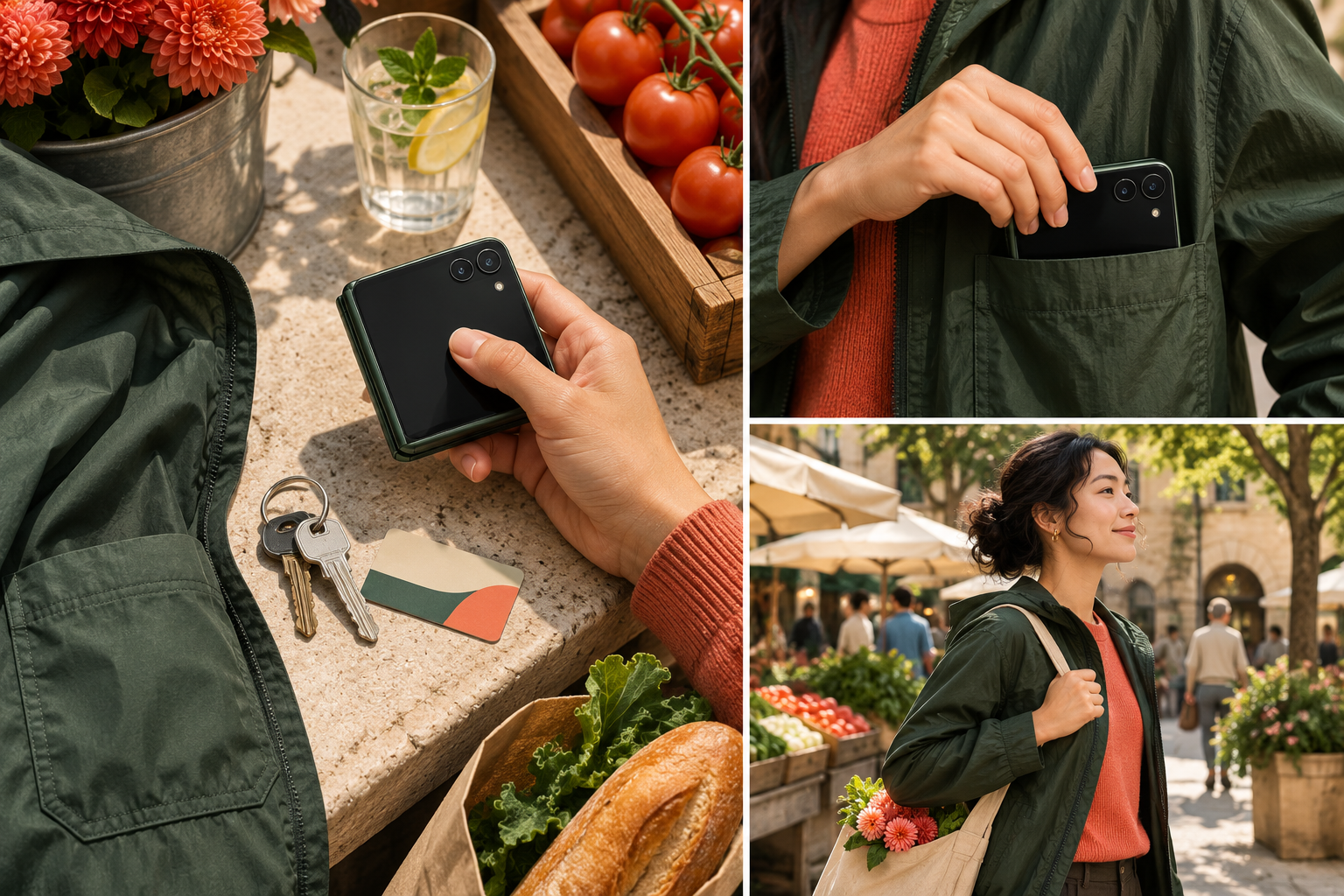
Conceptual illustration of one-handed use when the foldable phone is closed.
Camera and identity features remain the trade-offs
The reviewer did not dismiss every compromise. The telephoto camera was still missed on some occasions, and Face ID remained desirable. Apple had added a face-unlock feature in a recent update, while the reviewer had also become reacquainted with Touch ID. These details show that the Duo changes both imaging options and the authentication routine rather than reproducing the Pro Max experience unchanged, according to TechCrunch.
Those limits matter differently by role. A user who regularly needs telephoto photography has a documented hardware compromise to consider. A team with established sign-in routines must distinguish the reported face-unlock feature from the Face ID capability the reviewer still missed. The source does not supply enterprise deployment details or comparative biometric testing.
The decision is therefore specific: evaluate the Duo around a real paired-app task and the value of its compact folded handling. The review supports those two benefits for one user, but it does not demonstrate organization-wide productivity or remove the stated camera and identity trade-offs.