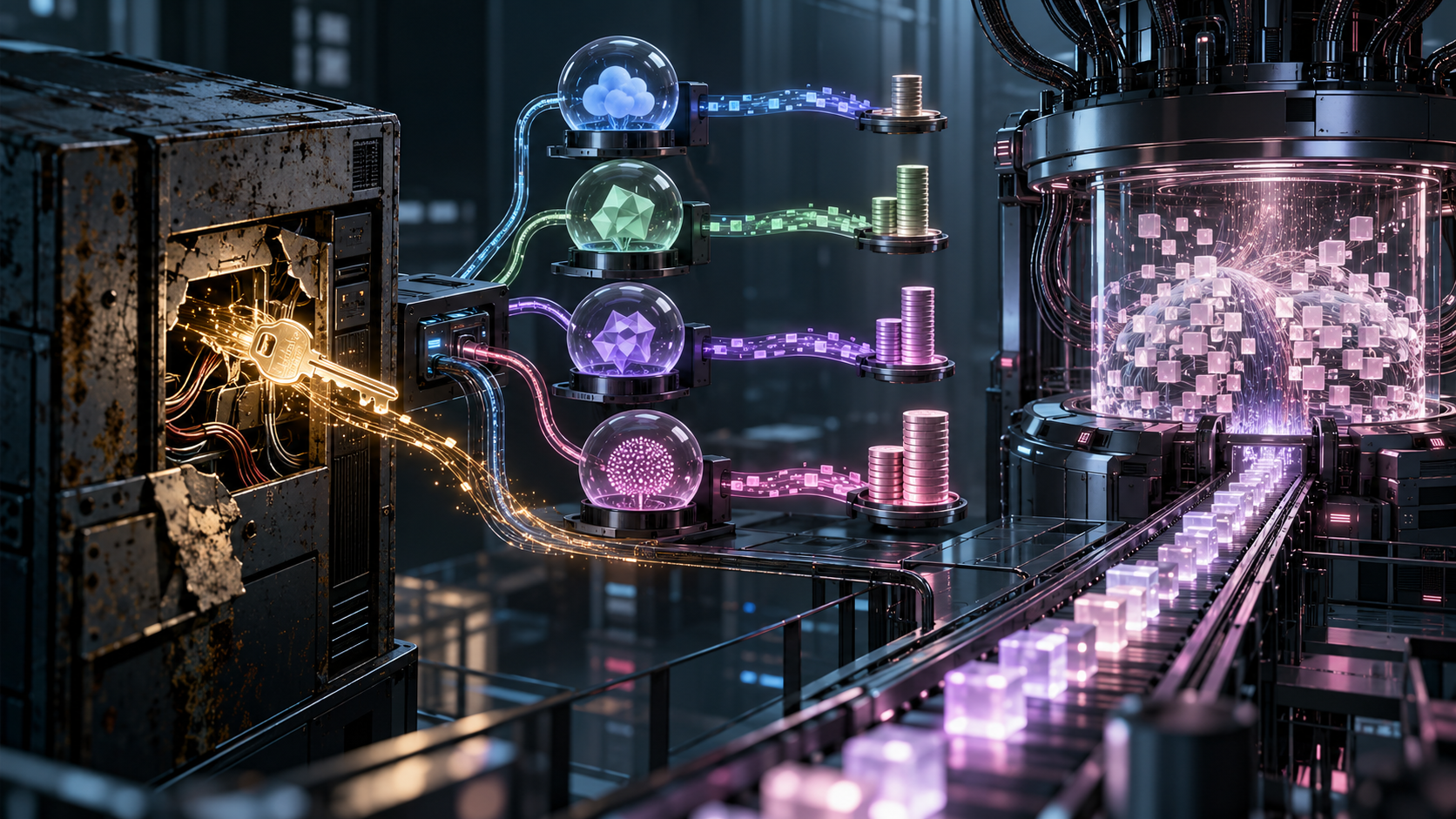
Anthropic says its AI-heavy workflows are producing more code per employee, more closed sales per representative and more processed contracts. Yet its internal report also identifies human attention and judgment as a productivity bottleneck because employees must read and organise a growing volume of AI output. The evidence points to a specific operational trade-off: automation can accelerate production while transferring work into review, coordination and accountability, according to TechCrunch’s account of the report.
For SME leaders and commercial operations teams, the relevant decision is not whether AI produces more material. It is whether the resulting workflow increases accepted output without consuming the gain in checking, prioritising and coordination.
Human attention has become the limiting resource
Anthropic describes a “deluge” of AI-generated text that employees must read and organise. In an internal survey, 27% of employees said Claude had made them more productive, while 20% said their role had shifted from doing work to managing Claude instances. One employee compared the experience to babysitting because each instance generated demands for attention, as reported by TechCrunch.
The mechanism matters more than the metaphor. An AI system can create drafts, analyses or code in parallel, but every additional output competes for a person’s finite review capacity. When generation expands faster than evaluation, the bottleneck moves downstream rather than disappearing.
Commercial operations teams should therefore distinguish generated volume from usable output. A larger set of account summaries, proposals or campaign variants is not an operational gain when employees spend the recovered production time deciding what to trust, revise or discard. Anthropic itself acknowledges this distinction in software work: more code does not necessarily represent better code or greater business impact, although the company says it has not identified a decline in code quality.
Junior hiring fell as the workforce changed
The share of junior employees in Anthropic’s technical departments fell from 21% to 14% from early 2025, while junior technical hires dropped from 27% to 9%. Technical teams also declined from 61% to 56% of the total workforce. Anthropic attributes the broader composition change to expanding business functions and coding tools that let non-technical employees build software, according to the figures reported by TechCrunch.
These figures document Anthropic’s staffing pattern; they do not establish that an SME should reduce junior recruitment. Anthropic has deliberately organised its workflows around AI, making it a useful but atypical case rather than a general labour benchmark.
The practical issue is where entry-level employees acquire judgment if AI absorbs routine production tasks. Removing drafting or preparation work also removes activities through which less experienced staff learn standards, exceptions and customer context. A team redesign therefore needs an explicit route from observing AI output to evaluating and eventually owning the decision behind it. Without that route, lower demand for basic execution can narrow the internal pipeline for future reviewers and managers.
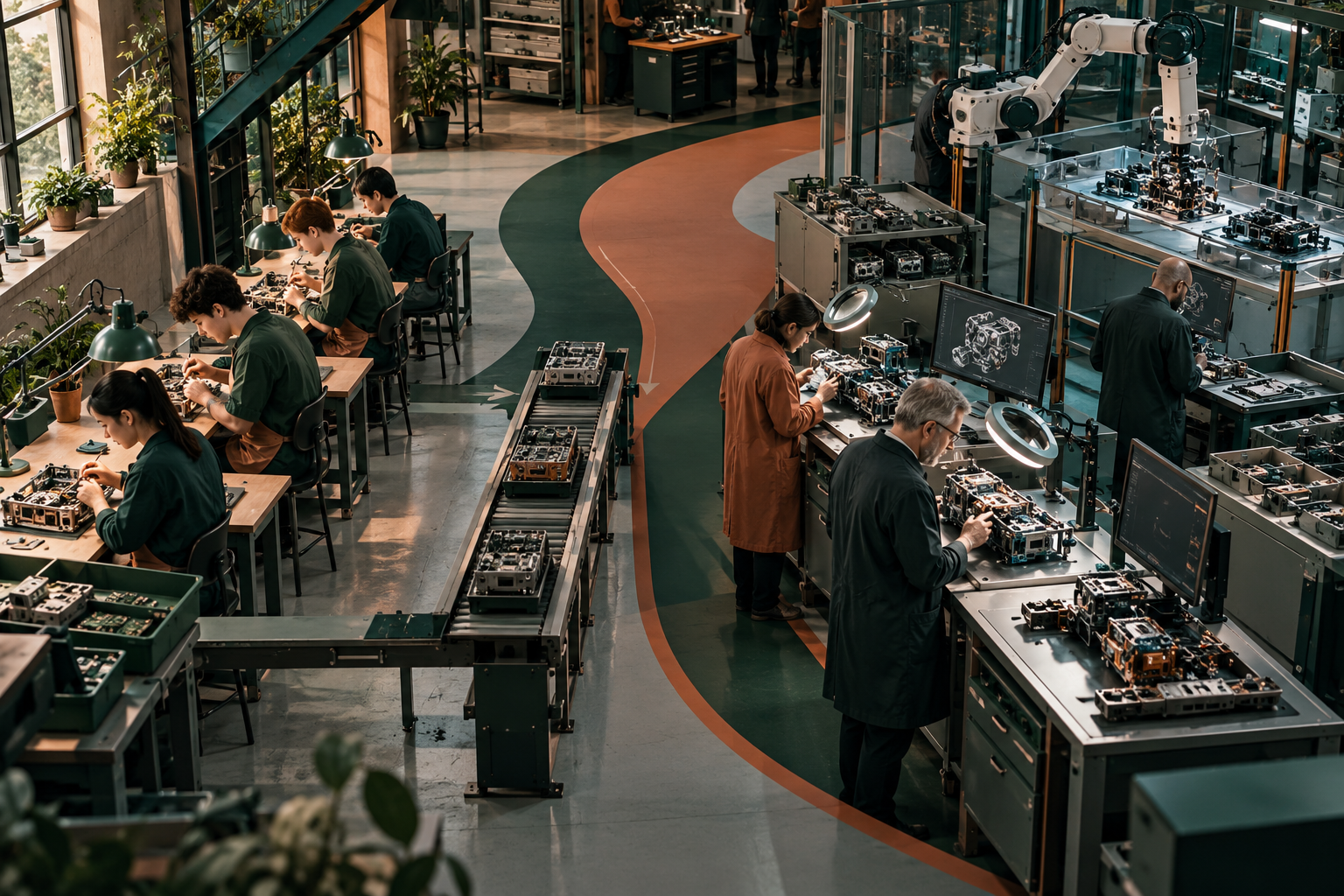
Conceptual illustration of a narrower junior pathway within an AI-intensive technical workflow, not a photograph of Anthropic’s workplace.
More AI output has coincided with more meetings
Anthropic’s calendar data shows that meeting time per employee increased 20% over the previous year and rose 16% among technical contributors. The company links the increase to human trust and accountability, with employees describing face-to-face coordination as indispensable, according to TechCrunch.
The report does not prove that AI alone caused the increase. Anthropic is also scaling, and its business functions are expanding. It does show that greater automation did not coincide with a simple reduction in coordination time.
For commercial teams, this separates two automation choices. Automating a self-contained production step can remove repetitive effort. Automating work that crosses sales, finance, legal or delivery boundaries can generate more items requiring agreement between those functions. In the second case, meeting time and decision latency belong in the productivity assessment alongside the speed of generation.

Conceptual illustration of additional coordination around AI-generated work, not a photograph of an actual meeting.
Choose a bounded workflow before changing staffing
The strongest supported use of Anthropic’s evidence is a workflow decision, not a headcount forecast. Select a recurring task with a visible output and a defined reviewer: preparing an initial account brief, drafting a standard follow-up or classifying incoming requests. Measure completed work together with corrections, discarded outputs and reviewer time.
Proceed when accepted output rises without moving an equivalent burden into review and coordination. Redesign the role when AI removes routine execution but leaves judgment, customer context and accountability with the employee. Wait before changing junior hiring or team capacity when the only evidence is higher production volume, because Anthropic’s own report separates output indicators from demonstrated business impact.
Anthropic’s experience establishes a limit rather than a universal staffing model: AI can increase production while making attention scarcer. The decision to watch is whether a specific workflow releases human judgment or merely gives it more material to process.