A Reims day trip from Paris works best when you choose the experience before filling the schedule. Decide whether your priority is Champagne, the cathedral, or a balanced introduction to both. Secure any timed visits, allow space for lunch and local travel, and confirm how your return to Paris will work. A private driver is particularly useful when your plans involve several addresses, luggage, or appointments outside the city center.
The Paris to Reims private driver service from Paris Chauffeur Services outlines arrangements for direct journeys, waiting between visits, and return transportation. Its booking guidance distinguishes the vehicle service from cellar tickets, tastings, meals, and guiding. That distinction is the foundation of a successful Champagne excursion: a reserved car and a confirmed visitor experience are separate parts of the day.
This guide explains how to connect them, compare transportation options, and prepare an itinerary that leaves enough time to enjoy Reims without rushing.
Key takeaways
- Choose a principal experience before booking transport or adding secondary stops.
- Confirm cellar reservations, tour language, meeting location, and visit duration directly.
- Keep transportation, admission, tasting, lunch, and guiding costs clearly separated.
- Treat Reims and Épernay as distinct destinations requiring travel between appointments.
- Confirm the return arrangement and the person authorized to approve changes.
What makes Reims worth visiting?
Reims offers a combination of architectural history and Champagne heritage. The cathedral belongs to the UNESCO property encompassing Notre-Dame, the former Abbey of Saint-Rémi, and the Palace of Tau. The designation reflects their architectural importance and relationship with the history of French royal coronations.
Champagne provides another way to understand the region. The UNESCO listing for Champagne Hillsides, Houses and Cellars connects vineyard landscapes with production and commercial sites, including Saint-Nicaise Hill in Reims and the Avenue de Champagne in Épernay. Seeing a cellar therefore adds context to the landscape and the industry, rather than merely providing somewhere to taste a drink.
You do not need to pursue every theme on the same visit. An architecture enthusiast may prefer an unhurried cathedral visit, lunch, and a walk. A wine-focused traveler may choose a confirmed producer appointment as the anchor. A mixed group can combine an accessible introduction to the city with a cellar experience suited to everyone’s interests.
The strongest itinerary has a clear purpose and enough breathing room to fulfill it.
How should you structure a Reims day trip from Paris?
Start with the appointment that has the least flexibility. That might be an English-language cellar tour, a guided visit, or a lunch reservation important to your group. Build travel, arrival procedures, and other activities around it. Do not begin with a list of famous places and assume their availability will align.
| Main interest | Sensible starting plan | Detail to confirm |
|---|---|---|
| Cathedral and city history | Reims sightseeing with a relaxed lunch | Visitor access and any separate guided activity |
| First Champagne experience | A confirmed cellar visit plus time in Reims | Language, duration, tasting format, and meeting point |
| Producer-focused day | Appointments selected before transport is finalized | Travel between addresses and appointment compatibility |
| Family or mixed group | Shorter activities with flexible breaks | Children’s admission and alternatives for non-drinkers |
Avoid treating every blank space as an opportunity to add something. Time spent walking to an entrance, checking in, using facilities, or collecting purchases belongs in the itinerary. A schedule that includes only driving and official tour duration is incomplete.
Send the draft to the transport provider before committing to a complicated sequence. Ask which parts depend on traffic, parking, or access, and which proposed additions make the return less predictable.
Reims day trip from Paris: private driver or train?
Choose transportation according to the shape of your visit. Rail can suit travelers whose plans remain within Reims and who are comfortable arranging local movements separately. Check current services, arrival stations, and onward connections for your date. A station arrival still needs to connect sensibly with your first appointment.
A private vehicle becomes more useful when the day involves several locations, a hotel pickup, belongings you need to carry, or a return schedule coordinated around the group. It can also simplify travel for passengers who would find repeated connections inconvenient. Those benefits depend on the actual service included in the quote.
Independent driving offers control over departure and routing, but someone must remain responsible for driving throughout the trip. If tasting Champagne is central to the day, arrange transportation accordingly instead of leaving that responsibility unresolved.
Our guide to full-day and multi-day chauffeur service in Paris explains how a reserved service period differs from a single transfer. For Reims, the important question is whether the booking covers just reaching the city or the complete sequence of visits and return travel.
Booking a Champagne cellar visit
Select the experience before selecting the time slot. Some visitors want an introduction to production; others care about architecture, a particular producer, or a more focused tasting. Ask the venue what the booked experience actually includes and whether it matches the group’s expectations.
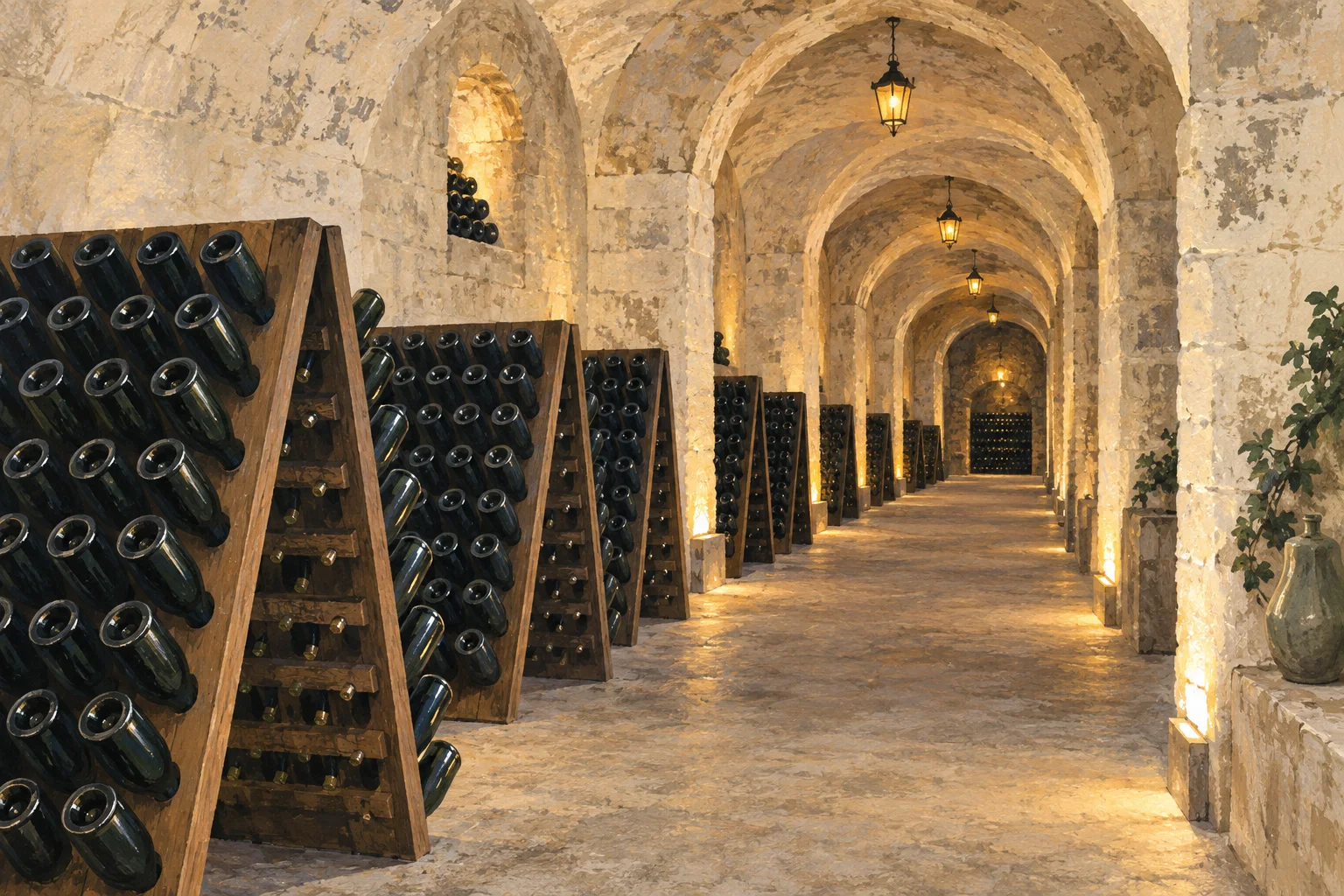
Check the language, duration, arrival instructions, cancellation terms, and conditions for children or guests who will not drink. If mobility or stairs are a concern, describe the need specifically. An evocative cellar photograph does not establish the accessibility of the visitor route.
Allow for check-in before the scheduled start. Confirm whether late arrival means joining late, moving to another session, or losing the booking. Do not assume the driver can negotiate an exception with the venue.
Keep the cellar confirmation separate from the chauffeur confirmation, but share the operational details with the person planning the route. The chauffeur needs the correct address and appointment time, not necessarily the entire payment history.
Finally, ask about clothing and bags if the venue provides visitor guidance. Underground spaces and outdoor walking can call for different preparation. Follow the producer’s current instructions rather than assuming every cellar experience operates in the same way.
Visiting the cathedral without rushing
Give the cathedral its own place in the day. Arriving for a quick photograph between tightly scheduled tastings creates a different experience from allowing time to appreciate the building and its setting. Decide which experience you want before finalizing the route.
Check visitor information and any restrictions affecting your date. A functioning religious building may have activities that influence sightseeing access. If you want specialist interpretation, establish whether you need a separate guide and where that guide will meet the group.
The neighboring Palace of Tau also requires its own availability check. Consult the monument’s official visiting information before building it into the itinerary; restoration work and changing access arrangements can affect plans. A heritage designation does not mean every associated interior is open whenever you arrive.
Agree on a practical reunion point after the visit. The most convenient pedestrian exit may differ from the location where a vehicle can wait or collect passengers. A clear contact procedure avoids turning an otherwise relaxed stop into a search for the car.
Should you add Épernay or vineyard villages?
Adding another destination can deepen a Champagne visit, but it also changes the day. Reims, Épernay, and vineyard appointments are separate locations. Confirm the address of every visit and include the intervening journey before accepting the next time slot.
The Paris to Épernay private driver page is useful when your main interest lies around Champagne-house visits there. Compare an Épernay-centered program with a Reims-centered program before automatically combining both. A more focused route may give you a better experience than a larger collection of names.
For a village visit, distinguish a confirmed producer appointment from a scenic stop. Vineyards are working landscapes, and a drive through the region does not grant permission to enter private property or visit a business without arrangements.
If the second destination forces you to shorten the activity you most wanted, reconsider it. Saving that experience for another trip is often more satisfying than rushing both. Ask the provider to identify the practical consequences of adding the stop, including the revised service duration and return expectations.
Build lunch and free time into the plan
Lunch is part of the itinerary, not spare time available only if everything else finishes early. Decide whether you want a substantial restaurant meal, a simpler break, or a venue chosen for proximity to your next appointment. Confirm reservations directly where needed and mention dietary requirements beforehand.
Avoid booking lunch across town immediately after a visit whose end time is approximate. Walking back to the pickup point, boarding, and reaching the restaurant all take time. The same applies when an afternoon cellar tour follows the meal.
Keep some discretionary time for a walk, a shop, or simply sitting down. For passengers purchasing bottles, ask the seller about suitable handling and transport, and tell the chauffeur if additional space will be required. Do not assume purchases can be shipped or carried onward without checking the relevant arrangements.
A private itinerary should offer a calmer pace. If every stop ends with the group watching the clock, the program needs editing before it needs another vehicle upgrade.
What belongs in the chauffeur request?
Prepare one clear brief and send the same version to any providers you compare. Include confirmed information, identify provisional items, and make your priorities explicit.
- Pickup date, hotel or complete address, and desired departure time.
- Passenger count, luggage, and any special equipment requirements.
- Confirmed visit addresses, reservation times, and expected durations.
- Preferred vehicle category and essential communication needs.
- Planned lunch, intermediate stops, and periods of waiting.
- Desired return destination and any firm evening commitment.
- Contact details for the traveler and the person managing changes.
- Questions about inclusions, extensions, cancellation, and rescheduling.
A flight arrival should be treated as a separate scheduling consideration. If you want to travel directly from an airport, disclose the flight details and discuss how delays could affect prepaid visits. A transport booking cannot protect a timed ticket from every change in the arrival schedule.
For a personalized proposal, request a private driver for your Paris day trip with the completed brief. Ask for the route, waiting arrangements, and return service to be described clearly before accepting.
Comparing quotes and understanding inclusions
A meaningful comparison begins with scope. Check whether each proposal covers a direct transfer, a return journey, or a continuous chauffeur service. Confirm when the reserved period begins and ends, and how additional time is handled. A headline amount alone cannot answer those questions.
Keep transport separate from admission, tasting, meals, and guiding unless the provider explicitly includes them. If assistance with reservations is offered, ask who makes the booking, who receives the confirmation, and which party’s cancellation terms apply.
Vehicle suitability matters as much as appearance. Describe the luggage, any purchases you expect to carry, and the needs of the group. Request confirmation of the actual category and capacity available for the date, rather than relying on a generic fleet image.
For international visitors, confirm the payment currency and the billing details. Save the accepted proposal with the visit confirmations. If the itinerary changes later, ask for a revised written summary so the traveler, driver, and organizer remain aligned.
Using digital tools to coordinate the day
A shared itinerary can reduce repeated messages. Store confirmed addresses, appointment references, and contact details in an organized document. Mark each item as provisional or confirmed, and identify who is responsible for resolving missing information.
AI can help summarize a long planning conversation or turn notes into a booking brief. It should not invent producer availability, opening hours, travel times, or ticket conditions. Verify those details with the relevant provider and official visitor sources before treating the document as operational.
The same method applies to other excursions. Our Honfleur, Normandy, and Giverny planning guide compares a concentrated day trip with a more spacious overnight route. The lesson for Champagne is similar: destinations should earn their place in the schedule.
For a different regional example, our private chauffeur booking guide for Antibes shows how precise pickup instructions and clear responsibilities support complex journeys. Use that discipline in Reims without copying travel assumptions from another region.
A realistic outline for a first visit
Imagine a couple staying in Paris who want a first introduction to Champagne and an opportunity to see the cathedral. Their essential booking is an English-language cellar experience. They also want lunch without rushing and do not need to visit another town.
They first confirm the cellar appointment, then ask the transport provider to build hotel pickup and return travel around it. Cathedral sightseeing occupies the part of the day that best fits confirmed access and the route. Lunch receives a defined place, and an optional walk remains optional.
If the schedule leaves insufficient time, they remove the optional activity before shortening their main visit. If a venue changes the reservation, they update the transport plan and restaurant accordingly. No part of the plan relies on a driver improvising admission on arrival.
This is an illustrative planning sequence, not a timed package or a promise of availability. Its value lies in the order of decisions: secure the main experience, coordinate movement, then add only what comfortably fits.
What should you bring?
Carry comfortable footwear, a layer suitable for the cellar guidance, and the confirmations you will need at each entrance. Keep essential medication and travel documents accessible rather than buried in luggage. Save the provider’s contact number and the agreed meeting points where you can retrieve them without mobile data.
If different people booked the car and the visits, nominate one person to hold the complete schedule. Before leaving Paris, check that everyone understands the day’s priorities and the return arrangement. This small handover prevents travelers from receiving contradictory instructions when a reservation changes or an optional stop is removed.
FAQ: can Reims be visited as a day trip from Paris?
Yes, a day visit can suit a focused program. The practical limit is your available time and the confirmed experiences you want, rather than the number of attractions on a wish list. Build the day around its essential appointment and allow for travel, meals, and return arrangements.
Are Champagne tastings included with a private driver?
Not automatically. Transport, cellar admission, tasting, guiding, and meals should be itemized or clearly described. Confirm inclusions before paying. A vehicle reservation does not by itself create a producer appointment, and assistance with booking should not be confused with an included ticket.
Can families or non-drinkers enjoy Reims?
A visit can emphasize architecture, history, walking, and a shared meal. If you include a cellar experience, ask the venue about children’s admission, non-drinking options, and accessibility. Choose activities that interest the whole group rather than assuming everyone wants an extensive tasting program.
How far ahead should I arrange the excursion?
Begin when your travel dates and priorities are clear. Check the experiences you care about before finalizing transport, especially if language, group size, or a specific producer matters. Availability varies, so confirm arrangements directly and retain the conditions for changes alongside the booking documents.